
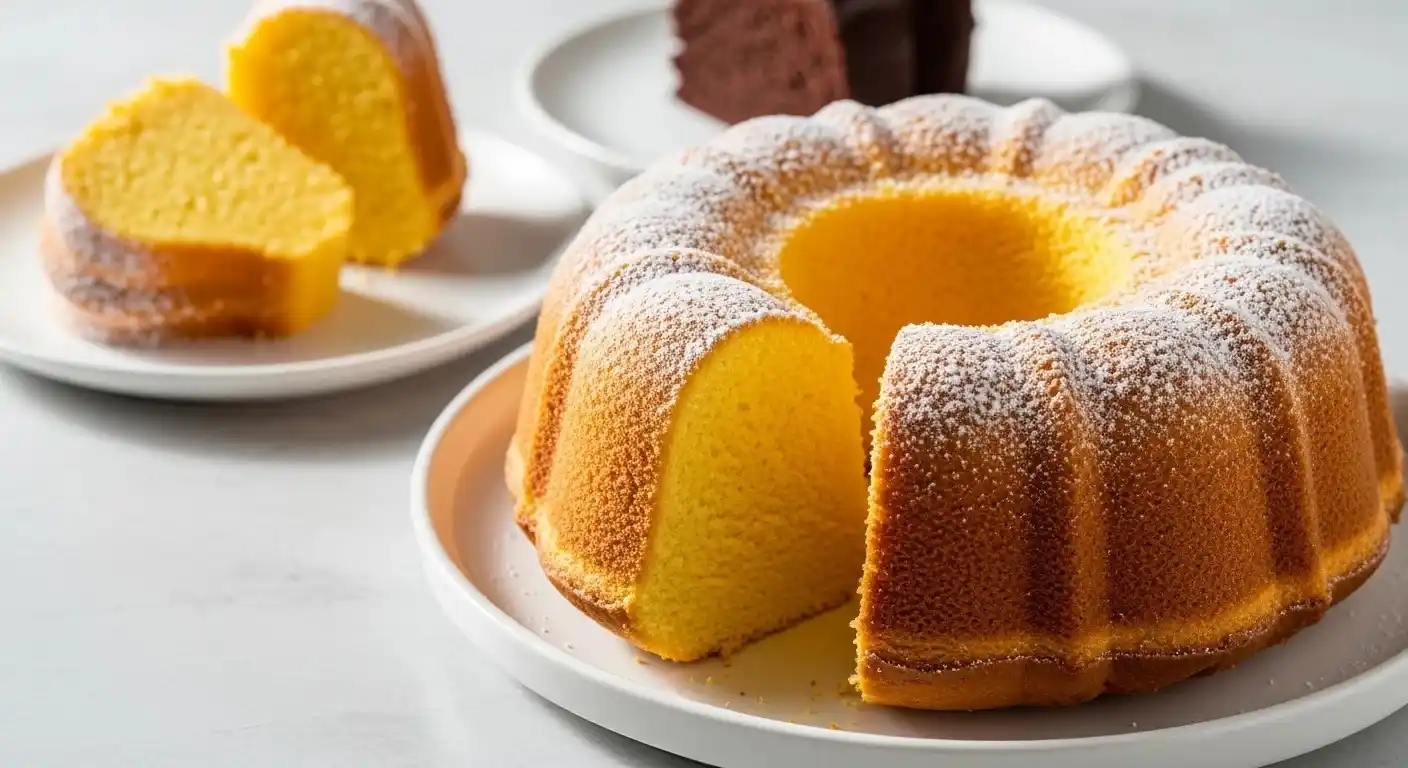
Bolo de Fubá Recipe: Traditional Brazilian Cornmeal Cake

Bolo de Fubá Recipe: Traditional Brazilian Cornmeal Cake

A good bolo de fubá recipe isn’t trying to be a fancy layer cake. It’s the kind of cake you cut into thick slices, serve with coffee, and somehow keep going back for “just one more bite.” The texture is rustic but tender, and the flavor is warm and simple — mild corn sweetness, sometimes with a whisper of fennel.

Unlike dense American-style cornbread, bolo de fubá is genuinely light. The secret most versions of this cake skip: whipping the egg whites separately and folding them in at the end, which gives the crumb an airy lift that a standard mixed batter never achieves on its own.


What Is Bolo de Fubá?

Bolo de fubá is a traditional Brazilian cake made with fine cornmeal (fubá), eggs, milk, sugar, fat, and baking powder. Corn has deep roots in Brazilian cooking, tied to indigenous traditions that predate Portuguese colonization, and fubá became a staple in rural kitchens across Minas Gerais and São Paulo. It’s closely associated with Festa Junina, the June harvest festival where corn-based dishes take center stage, though it’s eaten year-round as an everyday coffee cake.

The difference between this and “regular corn cake” comes down to texture and intent. Cornbread is savory, coarse, and meant to be crumbly. Bolo de fubá is a true cake — tender, balanced in sweetness, and built to hold together in a clean slice.

Equipment You'll Need

Why Texture Can Go Wrong

Cornmeal doesn’t behave like wheat flour. Flour brings gluten, which traps air and builds structure; fubá brings flavor and body but no elastic network of its own. That’s why the supporting techniques — whipped egg whites, the right fat, and careful mixing — matter so much here.

Whipped egg whites make the real difference. Beating the whites separately until soft peaks form, then gently folding them into the batter at the end, traps air that a standard all-at-once mixing method can’t replicate. This is the single biggest reason some versions of bolo de fubá turn out light and almost airy, while others come out dense and heavy.

Fine cornmeal vs. coarse cornmeal. Fine cornmeal hydrates evenly into a smooth batter. Coarse cornmeal hydrates unevenly, leaving a gritty texture no amount of extra mixing fixes.

Oil vs. butter. Butter adds richer flavor; oil is more reliably moist and helps the cake stay soft for longer. If you want a moist cake that keeps well for a couple of days, oil is the safer choice.

Recipe

Bolo de Fubá Recipe

Recipe by Camila Santos
0.0 from 0 votes
Course: BRAZILIAN CAKES, DESSERTSCuisine: Brazilian
Servings

8–10

slices
Prep time

15

minutes
Cooking time

40

minutes

Ingredients

  • 1 cup fine cornmeal (fubá)

  • 1 cup all-purpose flour

  • 1 cup sugar, divided

  • 4 large eggs, separated

  • 1 cup milk

  • ½ cup vegetable oil

  • 1 tbsp baking powder

  • Pinch of salt

  • 1 tbsp fennel seeds, lightly crushed (optional, for bolo de fubá com erva-doce)

Instructions

  • Wash and dry thoroughly. Submerge the leaves in cold water, swish to remove grit, then dry completely with a salad spinner or towel. Wet leaves steam instead of sauté, which softens the texture more than you want.

  • Whip the egg whites. In a clean bowl, beat the egg whites with an electric mixer until soft peaks form. Set aside — this is the step that gives the cake its lift, so don't skip it even if you're in a hurry.

  • Mix the yolks and wet ingredients. In a large bowl, whisk the egg yolks with about ¾ cup of the sugar until pale and slightly thickened. Whisk in the oil, then the milk.

  • Add the dry ingredients. Whisk in the cornmeal and flour just until smooth — you want a uniform batter, not a heavily beaten one. Stir in the baking powder, fennel seeds, and salt.

  • Fold in the whipped whites. Gently fold the whipped egg whites into the batter in two or three additions, using a spatula and a light hand. Overmixing here deflates the air you just worked to build in.

  • Pour and tap out air bubbles. Pour into the prepared pan and tap it firmly on the counter a few times — this releases trapped air pockets, which matters especially in a detailed bundt pan.

  • Bake. Bake 35–40 minutes, until golden and a toothpick comes out clean or with a few soft crumbs.

  • Cool before slicing. Let it cool in the pan for 10 minutes, then invert onto a rack to cool completely. Cutting into a warm cake compresses the crumb and can make it feel gummy.

Storage

  • Store in an airtight container at room temperature for up to 3–4 days — many people find it tastes even better the next day. Refrigerate for slightly longer freshness if needed. To freeze, wrap slices tightly and store in an airtight container for up to 2–3 months; thaw at room temperature, and the texture holds up surprisingly close to fresh.

Variations Worth Trying

  • Bolo de fubá com queijo: fold in 1 cup of grated cheese (Parmesan or a mild Brazilian cheese) for a richer, more savory version popular in Minas Gerais.
  • Bolo de fubá com goiabada: fold in ½–1 cup of diced guava paste for a fruity contrast — this combination is reminiscent of “Romeu e Julieta,” the classic Brazilian guava-and-cheese pairing.
  • Bolo de fubá cremoso: blend in 1 cup of sour cream or plain yogurt along with the milk for a creamier, more custard-like texture.
  • With coconut: fold in ½ cup shredded coconut for extra texture and a subtle tropical note.

What to Serve With Bolo de Fubá

The classic pairing is a strong cup of coffee. For something a little more festive, serve alongside sliced goiabada (guava paste) — the sweet, slightly tart fruit paste plays beautifully against the mild corn flavor, echoing the same combination found in bolo de fubá com goiabada.

FAQ: Bolo de Fubá Recipe

Bolo de fubá lasts about 3–4 days at room temperature when you store it in airtight conditions. Keeping it sealed helps prevent the cake from drying out and protects the tender crumb.

Yes, you can freeze cornmeal cake. Wrap slices tightly and place them in an airtight container. Thaw at room temperature, and the texture stays surprisingly close to fresh.

You can replace milk with coconut milk in a bolo de fubá recipe. Coconut milk keeps the cake moist and adds a gentle coconut note that works well with the corn flavor.

Not as written, since it includes wheat flour. A 1:1 gluten-free flour blend can work as a substitute, though texture may vary slightly.

It’s the main technique that separates a light, airy version from a dense, heavy one. The whipped whites trap air that gets folded into the batter, giving the cake genuine lift without relying only on baking powder.

Yes — expect a slightly longer bake time, and check the center carefully so it bakes through without overbaking the edges.

Conclusion

A great bolo de fubá recipe comes down to a few deliberate choices: fine cornmeal, oil for lasting moisture, and — most importantly — properly whipped egg whites folded in with a gentle hand. Get that balance right, and you have a cake that stays tender for days and tastes like the kind of home baking worth repeating.

Share this post: