Texture, Flavor, and the Role of Ingredients
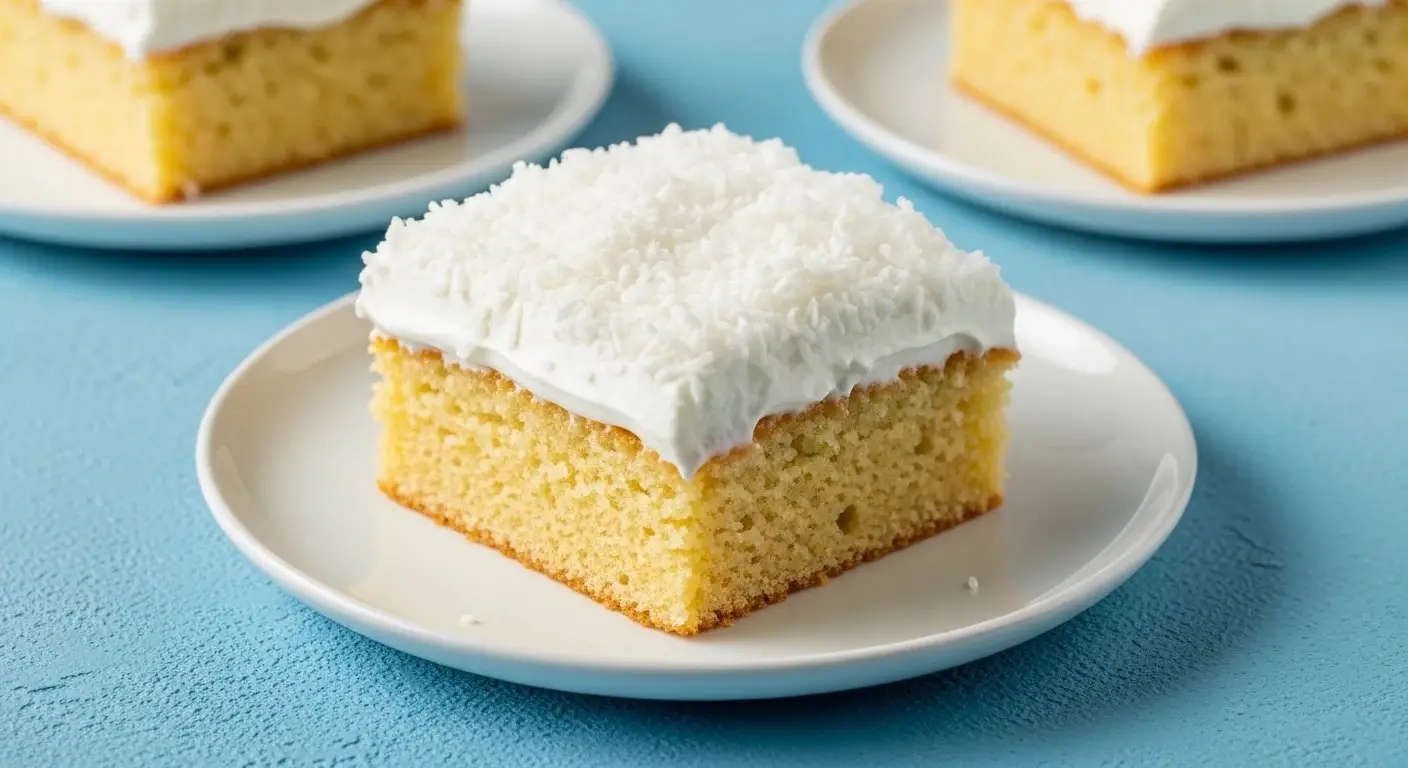
The flavor of coconut cake with condensed milk depends heavily on ingredient quality. Fresh shredded coconut from producers like Sococo delivers a brighter aroma than stale coconut. Toast coconut flakes briefly to activate toasted coconut aroma activation, but don’t let them darken too much or bitterness sets in.
Butter adds tenderness, while eggs stabilize the batter. Room temperature ingredients blend smoothly; cold ingredients often create a split mixture. That’s the difference between a smooth glaze and a runny frosting later on.
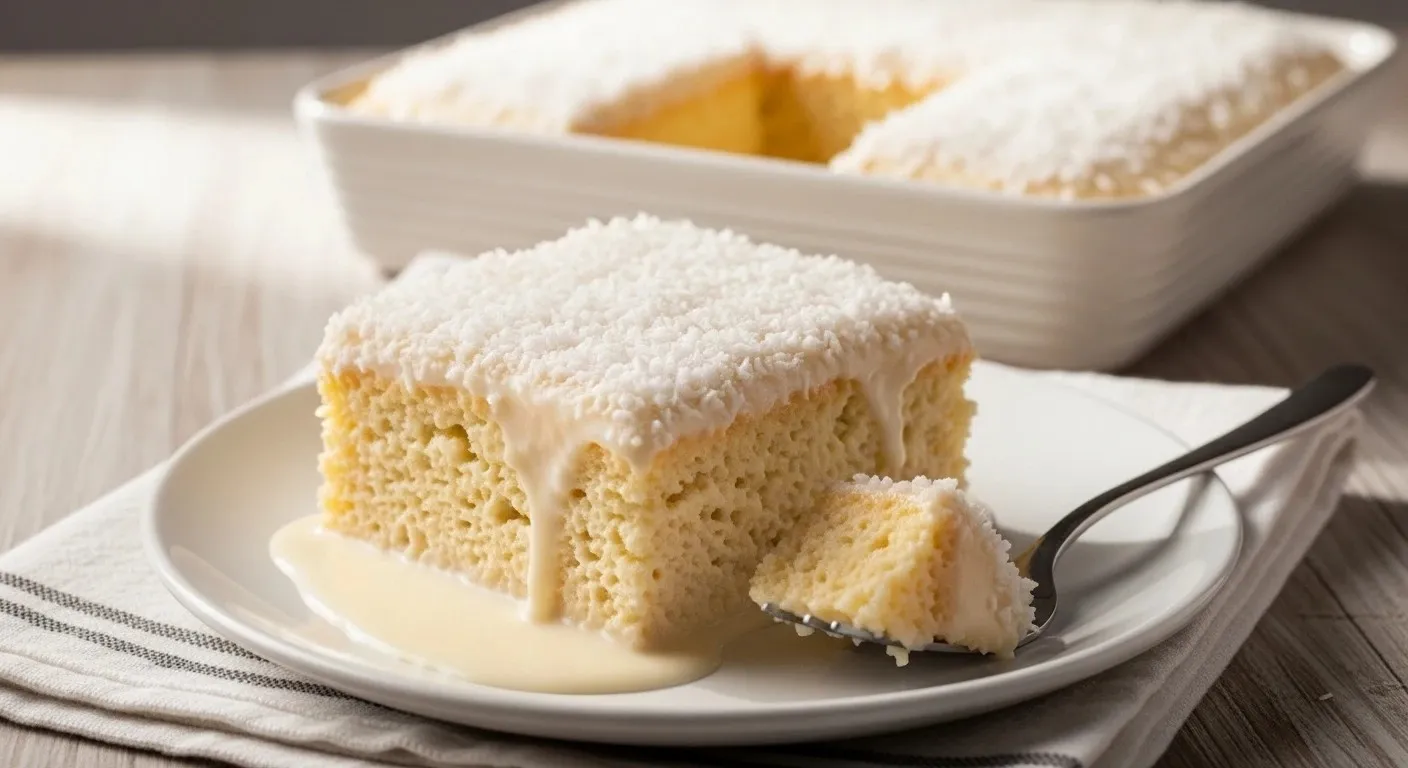
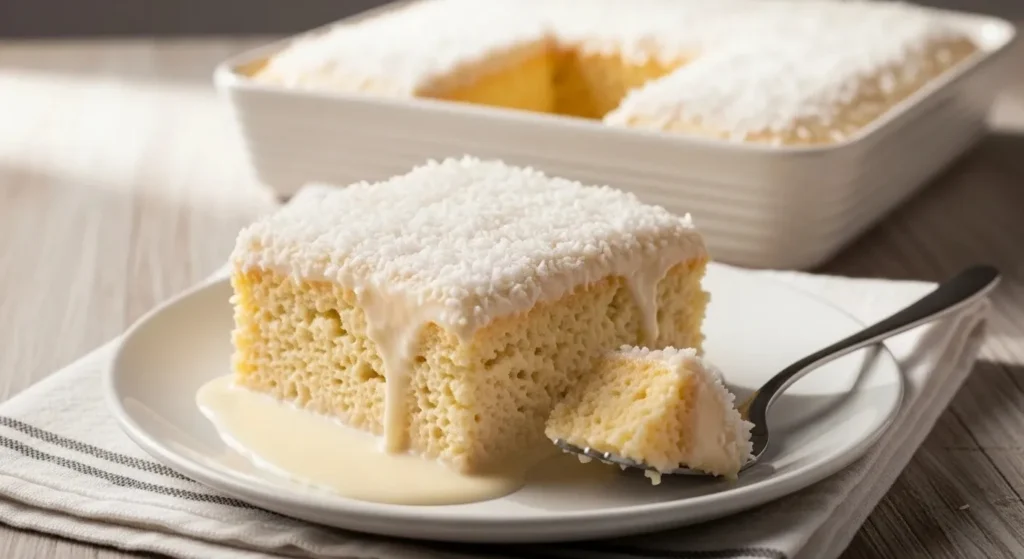
Coconut milk intensifies flavor, but too much can disrupt layered moisture equilibrium. This is especially noticeable in a coconut poke cake with condensed milk, where holes are poked into the baked cake and syrup is poured in. Done carefully, it stays moist. Overdo it, and you get a soggy bottom.
The word “cake” itself can mean to coat something thickly, but here we mean the baked dessert with a sliceable structure. Achieving slice integrity preservation requires proper cooling phase structure lock. Always cool before glazing on a rack to prevent trapped steam from softening the base.
The Cultural Side Most Recipes Skip
Most online recipes focus only on ingredients and steps. What they miss is context. In Brazilian culinary tradition, coconut cake with condensed milk often appears at Festa Junina dessert tables, alongside sweet breads and cakes rooted in rural celebrations.
Brazil became a hub for condensed milk-based sweets partly because Nestlé introduced shelf-stable dairy products that fit local tastes. Over time, coconut desserts became part of a larger dairy dessert system in Brazilian cuisine.
This cake also fits into the tropical baking repertoire that reflects climate and agriculture. Copra, the dried coconut meat traded globally, influenced coconut availability and consistency in commercial baking. That sourcing context affects coconut particle size optimization, which in turn influences texture.
For the broader cultural and historical landscape, explore our complete guide to Brazilian desserts
Practical Tips for Consistent Results
Small adjustments make a big difference.
- Use a cooling rack immediately after oven baking. This prevents trapped steam and avoids a soggy base.
- Measure coconut carefully. Too much disrupts the crumb matrix; too little weakens flavor.
- If using Leite Moça, reduce added sugar slightly. It’s already sweet and has a balanced sweetness.
- For stable frosting, chill the cake before applying coconut icing. Warm cake equals runny frosting.
These steps may seem minor, but they separate evenly baked results from collapsed layers.
Common Mistakes and How to Avoid Them
One frequent issue is overbaking. A moist crumb can quickly become dry crumb if left too long in the oven. Check at the 30-minute mark.
Another mistake is overmixing the batter. Excess mixing destroys aeration, leading to dense texture instead of fluffy texture.
Using cold ingredients is also problematic. Room-temperature ingredients create smooth batter; cold ingredients can cause split glaze or uneven rise.
Finally, pouring too much condensed milk glaze can overwhelm the structure. You want moisture infusion, not saturation. Controlled pouring ensures layered moisture equilibrium.