
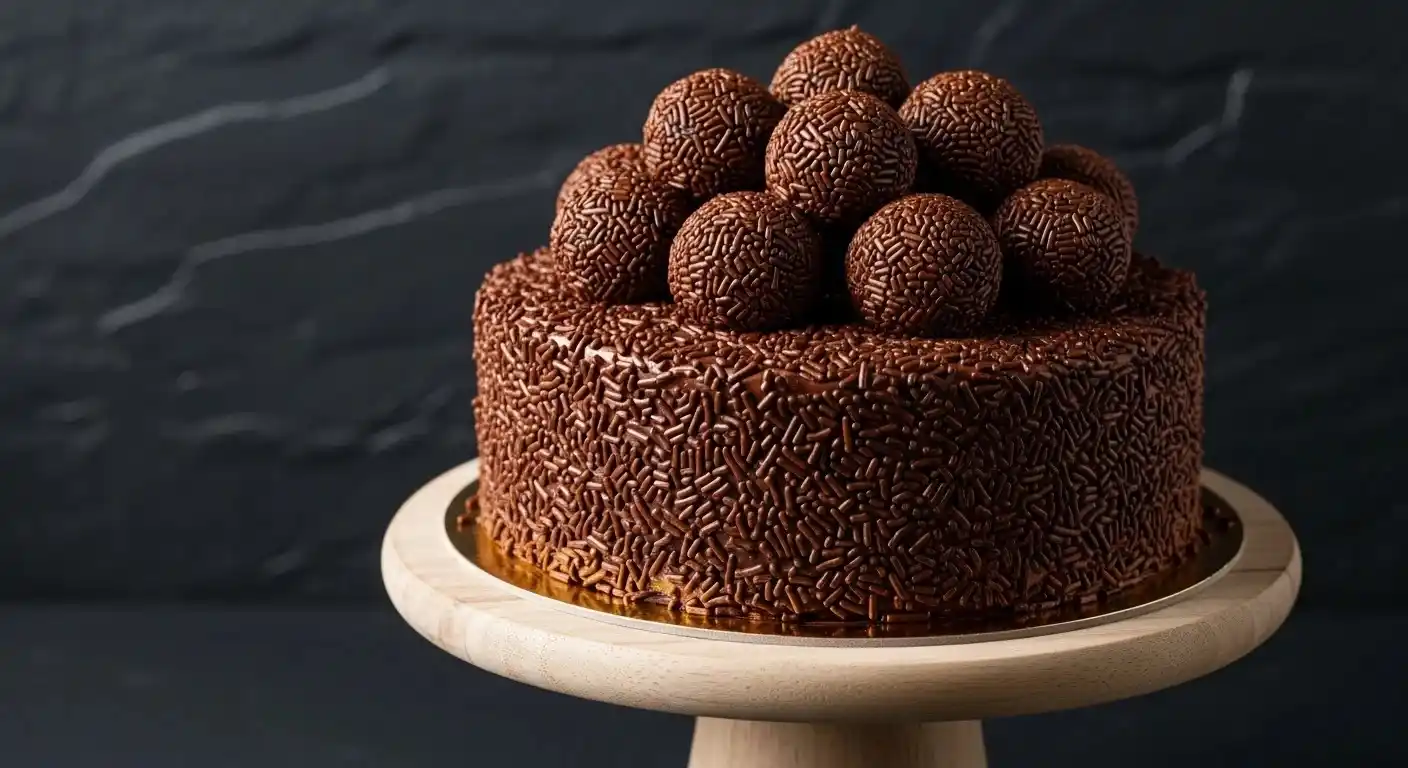
Brigadeiro Cake Recipe: A Brazilian Chocolate Layer Cake

Brigadeiro Cake Recipe: A Brazilian Chocolate Layer Cake

If you’ve ever had a slice of brigadeiro cake and thought it tasted like brownies and birthday cake had a perfect child, you’re not imagining it. A good brigadeiro cake recipe is built around two textures playing off each other: fluffy chocolate sponge layers and a thick, glossy brigadeiro cream that tastes like chocolate caramel.

This is the layered, celebration-worthy version of brigadeiro cake — the one you’d bring out for a birthday rather than a quick weeknight dessert. What makes it work is timing and thickness: the filling can swing from silky to runny to overcooked faster than most people expect, and getting that window right is really the whole recipe.

What Is Brigadeiro Cake?

Brigadeiro cake pairs baked chocolate sponge layers with brigadeiro filling — a stovetop mixture of sweetened condensed milk, cocoa powder, and butter, cooked until thick and glossy. It’s essentially Brazil’s most famous candy, reimagined as cake filling and frosting, and it’s a fixture at birthdays and celebrations across the country.

The confection traces back to Brigadier Eduardo Gomes, a 1945 presidential candidate whose supporters sold the candy at rallies to fund his campaign — the name stuck, and decades later, home bakers turned that same flavor into a full layer cake.

Equipment You'll Need

Why This Cake Works: Two Techniques in Contrast

Brigadeiro cake gets its depth from combining two different cooking methods. Oven-baking gives you a light, structured sponge; slow stovetop reduction concentrates the filling into something richer than a typical frosting. That contrast — airy cake against dense, caramelized filling — is what makes each bite feel more complex than an ordinary chocolate cake.

The sponge stays tender when you don’t overbake it. Waiting for the cake to look deeply dark and completely firm usually means it’s already lost too much moisture. Pull it as soon as a toothpick comes out with a few moist crumbs, not when it looks “fully done.”

The filling holds layers together through proper reduction. Condensed milk thickens as water cooks off and sugars concentrate. The reliable doneness cue: when you drag a spatula through the mixture, it should leave a trail that slowly closes back up, and the mixture should pull cleanly away from the pan as you stir.

Recipe

Brigadeiro Cake Recipe

Recipe by Camila Santos
0.0 from 0 votes
Course: BRIGADEIRO RECIPES, DESSERTSCuisine: Brazilian
Servings

2-layer

8-inch cake
Prep time

30

minutes
Cooking time

35

minutes

Ingredients

  • For the chocolate sponge:
  • 2 cups all-purpose flour

  • 1 cup unsweetened cocoa powder

  • 1½ cups sugar

  • 3 large eggs

  • 1 cup milk

  • ½ cup butter, softened

  • 1 tbsp baking powder

  • 1 tsp salt

  • 1 tsp vanilla extract

  • For the brigadeiro filling and frosting:
  • 2 cans (14 oz each) sweetened condensed milk

  • 4 tbsp unsweetened cocoa powder

  • 2 tbsp butter

  • Pinch of salt

  • For the ganache drip (optional, for a glossy finish):
  • 200g dark chocolate, chopped

  • 1 cup heavy cream

Instructions

  • Bake the cake layers
  • Prep and mix. Preheat oven to 350°F (175°C). Grease two 8-inch pans and line the bottoms with parchment. Beat the butter and sugar until light in color, then add the eggs one at a time.

  • Combine dry and wet. Whisk together flour, cocoa, baking powder, and salt in a separate bowl. Add to the butter mixture in three additions, alternating with the milk, mixing just until smooth.

  • Bake. Divide the batter evenly between the pans and bake until a toothpick comes out with a few moist crumbs, about 28–32 minutes.

  • Cool completely. Cool in the pans for 10 minutes, then transfer to a rack. Don't frost until fully cool — warm layers melt the filling into a runny mess instead of a clean spread.

  • Cook the brigadeiro filling
  • Cook low and slow. Combine condensed milk, cocoa, butter, and salt in a heavy saucepan. Cook over low heat, stirring constantly and scraping the bottom and corners, for 10–15 minutes.

  • Watch the texture, not the clock. It's ready when it visibly thickens and pulls cleanly away from the pan as you stir — a trail from your spatula should hold for a second before slowly closing. Cool to room temperature before using; warm filling runs right off the cake.

  • Assemble the cake
  • Level the layers. If the cakes domed while baking, trim the tops flat with a serrated knife for even stacking.

  • Fill and stack. Place the first layer on your cake board. Spread brigadeiro filling evenly, slightly thicker in the center than at the edges — this keeps it from squeezing out the sides once the second layer goes on. Add the second layer and press gently.

  • Crumb coat first. Apply a thin layer of brigadeiro frosting over the entire cake, then refrigerate for 15–20 minutes to set. This step traps loose crumbs so your final coat comes out clean.

  • Final frosting. Cover the cake with the remaining brigadeiro cream, smoothing with an offset spatula.

  • Add the ganache drip (optional)
  • Heat the cream. Warm until steaming, not boiling, then pour over the chopped chocolate. Let sit 2 minutes, then stir until smooth and glossy.

  • Cool to drip consistency. Let the ganache cool until it flows slowly off a spoon rather than pouring like syrup — too hot and it runs everywhere; too cool and it won't drip at all. Pour over the chilled cake, letting it cascade naturally over the edges.

Storage

  • Refrigerate in an airtight container for up to 3–4 days. Let slices sit at room temperature for about 20 minutes before serving so the crumb softens back up. To freeze, wrap individual slices tightly and store in a freezer-safe container for up to 2 months; thaw overnight in the fridge, which protects the texture better than thawing at room temperature.

Common Mistakes and How to Fix Them

  • Dry crumb: usually overbaking or flour that was packed too densely into the measuring cup. Fluff flour before measuring, and pull the cake as soon as it’s set.
  • Runny brigadeiro filling: undercooked. Return it to low heat and keep stirring until it thickens and pulls from the pan.
  • Overcooked, stiff filling: loosen with a tablespoon or two of warm cream, stirred in gradually. Prevention is easier — watch the texture closely in the last few minutes.
  • Sliding layers: either the cake was still warm when filled, or too much filling was used. Cool completely and don’t overstuff.
  • Split, grainy ganache: the cream was too hot, or it wasn’t given time to melt the chocolate gently before stirring. Keep it just below boiling and stir patiently.

Variations Worth Trying

  • Triple chocolate: fold mini chocolate chips into the batter and finish with both brigadeiro frosting and a ganache drip.
  • White chocolate brigadeiro cake: swap cocoa for white chocolate in the sponge, and use a white (cocoa-free) brigadeiro filling for a lighter flavor profile.
  • Coconut brigadeiro cake: fold shredded coconut into the filling, or coat the outside in toasted coconut instead of a smooth frosting finish.
  • Brigadeiro sheet cake: bake the same batter in a single 9×13 pan and spread the filling over the top for a simpler, no-stacking version — ideal for a quicker weeknight take on the same flavor.

Frequently Asked Questions About Brigadeiro Cake Recipe

About 3–4 days refrigerated in an airtight container. Let slices warm slightly at room temperature before serving.

Yes — wrap slices tightly and freeze up to 2 months. Thaw overnight in the fridge rather than at room temperature to avoid condensation making the cake soggy.

Yes, especially for the sheet-cake variation — the signature flavor comes from the brigadeiro filling either way, so a good boxed mix works fine if you’re short on time.

It needs more time on low heat. Keep cooking, stirring constantly, until it thickens and pulls away from the pan — that’s the real doneness cue, not a fixed number of minutes.

Yes — assemble it a day in advance and refrigerate. Many people find the flavor actually improves overnight as the layers settle and the filling’s moisture evens out.

Brigadeiro cream itself works perfectly as the frosting — it matches the filling and gives a smooth, glossy finish without any extra components.

Conclusion

A great brigadeiro cake recipe comes down to texture control: bake the sponge until just set, and cook the brigadeiro cream until it reaches that thick, spatula-trail stage. Get those two things right, and the rest follows — clean layers, a frosting that spreads without sliding, and slices that hold their shape on the plate.

Share this post: