
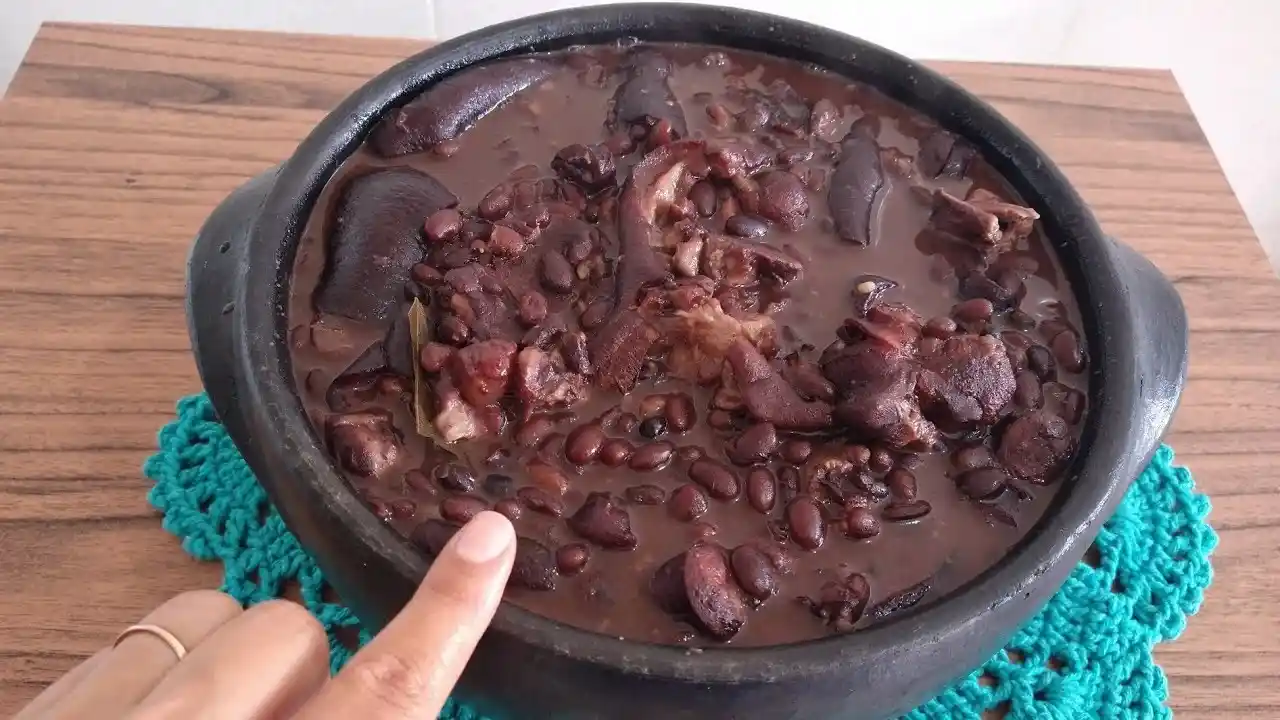
Instant Pot Feijoada Recipe: Authentic Brazilian Comfort

Instant Pot Feijoada Recipe: Rich and Ready in About an Hour

A well-made Instant Pot feijoada recipe proves you don’t need to spend all day tending a pot to enjoy one of Brazil’s most iconic dishes. Feijoada, the country’s beloved black bean stew, is traditionally simmered for hours with pork, sausage, and cured meats. With a pressure cooker, you get that same smoky, rich depth in about an hour instead.

I’ve made feijoada both the traditional stovetop way and in an electric pressure cooker, and the real difference isn’t just speed — it’s understanding how pressure changes texture and salt balance. Once you know how to work with those variables instead of against them, the shortcut version tastes genuinely close to the long-cooked original.

What Is Feijoada?

Feijoada traces its roots to Portugal, where it originally started as a white bean and pork stew. Brought to Brazil and adapted over generations — likely shaped by enslaved Afro-Brazilian communities working with whatever pork cuts were available — it evolved into the black bean version known today, now considered Brazil’s national dish. It’s traditionally eaten on Saturdays, served with rice, farofa, sautéed collard greens, and orange slices.

An Instant Pot feijoada keeps all those same core elements — beans, smoked meats, aromatics — but uses pressure to tenderize everything in under an hour instead of the several hours a traditional stovetop version needs.

Equipment You'll Need

Building Real Flavor: The "Rule of Three" Meats

A flat-tasting feijoada usually comes down to using just one type of meat. A good rule of thumb: combine at least three — one cured/smoked (bacon), one sausage (linguiça or a similar smoked sausage), and one larger cut (pork shoulder, ribs, or a smoked ham hock). Each contributes something different: bacon brings rendered fat and smokiness, sausage brings spice and depth, and the larger cut brings body and, in the case of a ham hock, natural collagen that helps thicken the stew as it cooks.

Recipe

Instant Pot Feijoada Recipe

Recipe by Camila SantosCourse: FEIJOADA RECIPES, MAIN DISHESCuisine: Brazilian
Servings

6–8

cups
Prep time

20

minutes
Cooking time

1

hour

Ingredients

  • 4 strips thick-cut bacon, chopped

  • 1 large yellow onion, diced

  • 4 garlic cloves, minced

  • 1 lb dried black beans, rinsed (soaked overnight, optional but recommended for more even cooking)

  • 1 smoked pork shank or ham hock

  • 1–2 smoked sausages (linguiça or kielbasa), sliced

  • 1–2 bay leaves

  • 5 cups water or low-sodium broth

  • Freshly ground black pepper

  • Pinch of red pepper flakes (optional)

  • Salt, to taste, added at the end

  • Fresh parsley, for garnish

Instructions

  • Brown the bacon and aromatics. Set the Instant Pot to sauté mode. Cook the chopped bacon 3–4 minutes until the fat renders. Stir in the onion and cook until softened, about 3 minutes, then add the garlic and cook 30 seconds, just until fragrant. This browning step builds real depth — skipping it leaves the finished stew tasting noticeably thinner.

  • Deglaze the pot. Pour in a splash of water or broth and scrape up any browned bits stuck to the bottom. This step matters more than it seems — skipping it is one of the most common causes of a "burn" warning once the pot comes up to pressure.

  • Add the beans and meats. Add the black beans, sliced sausage, pork shank, and bay leaves. Pour in the water or broth, keeping the beans covered by about an inch — don't overfill, since beans expand significantly as they cook.

  • Pressure cook. Lock the lid and cook on high pressure: 40 minutes for soaked beans, 55–60 minutes for unsoaked. Allow natural pressure release for at least 15–20 minutes before venting — releasing too fast can make the beans split unevenly.

  • Shred the meat. Remove the pork shank, shred the meat off the bone, discard the bone and excess fat, and stir the shredded meat back into the pot.

  • Season at the end, not before. Taste before adding salt. Smoked meats release a fair amount of sodium as they cook, so salting early risks an overly salty stew.

  • Thicken if needed. If the stew looks thinner than you'd like, use a potato masher or immersion blender to partially mash some of the beans directly in the pot, then simmer uncovered on sauté mode for 5–10 minutes. This thickens the broth naturally without any flour or cornstarch.

  • Rest, then serve. Let the stew sit for 10–15 minutes before serving — it thickens slightly more as it cools. Serve over white rice, with farofa, sautéed collard greens, and orange slices alongside to cut through the richness.

Storage

  • Refrigerate in an airtight container for up to a week — feijoada is one of those dishes that genuinely tastes even better the next day. Freeze in portions for up to 3 months; thaw overnight in the fridge and reheat gently on the stovetop, adding a splash of water or broth if it's thickened up too much. The texture difference is real but not a downgrade: pressure-cooked beans tend to come out creamier, while stovetop beans often stay a touch firmer. Both are legitimate, and which one you prefer often comes down to personal taste rather than one being more "correct."

Instant Pot vs. Traditional Stovetop Feijoada

Traditional feijoada simmers slowly on the stovetop for hours, allowing steady evaporation that concentrates the flavor gradually. A pressure cooker works differently — it’s a sealed environment, so moisture stays trapped rather than evaporating, which is why the stew can look a bit looser right when you open the lid (the mash-to-thicken step above fixes this in minutes).

The texture difference is real but not a downgrade: pressure-cooked beans tend to come out creamier, while stovetop beans often stay a touch firmer. Both are legitimate, and which one you prefer often comes down to personal taste rather than one being more “correct.”

Common Mistakes and How to Avoid Them

  • Skipping the deglaze step: the most common cause of a burn warning in an electric pressure cooker. Always scrape up the fond before sealing the lid.
  • Using only one type of meat: results in a flatter, less layered flavor. Aim for at least three different pork elements.
  • Salting too early: smoked meats release sodium during cooking, so adding salt at the start often leads to an oversalted stew.
  • Overfilling the pot: beans expand significantly under pressure — respect the max-fill line and don’t pack the pot too full.
  • Skipping natural release: venting immediately can cause uneven bean texture. Give it the full 15–20 minutes before opening.

Variations Worth Trying

  • Canned beans, for an even faster version: pressure-cook the meats and aromatics first, then stir in drained canned beans and simmer briefly on sauté mode rather than pressure-cooking them, since canned beans are already fully cooked and will turn mushy under pressure.
  • With chorizo: add sliced, pre-cooked chorizo along with the sausage for extra kick.
  • Vegetarian version: replace the pork and bacon with mushrooms and smoked paprika, using vegetable broth. It’s a different dish in spirit, but it holds onto a similar smoky, hearty character.

Frequently Asked Questions

About 40 minutes on high pressure for soaked beans, or 55–60 minutes for unsoaked, plus at least 15–20 minutes of natural pressure release afterward.

Yes — pressure-cook the meats first, then stir in drained canned beans and simmer briefly on sauté mode, since canned beans are already cooked and don’t need the full pressure-cooking time.

Traditional versions include pork shoulder, ribs, bacon, and linguiça sausage, sometimes with carne seca (salted dried beef). A mix of at least three different pork elements gives the best depth of flavor.

Almost always from skipping the deglaze step after browning. Always scrape up the browned bits and add a splash of liquid before sealing the lid.

Yes — replace the pork and bacon with mushrooms and smoked paprika, using vegetable broth. It’s a meaningful departure from the traditional version but can still deliver real depth and heartiness.

This is normal for a pressure cooker, since moisture stays trapped instead of evaporating like it would on the stovetop. Mash a portion of the beans with a potato masher or immersion blender and simmer uncovered for a few minutes to thicken.

Conclusion

A thoughtfully made Instant Pot feijoada recipe respects the structure of the dish — a mix of smoked meats, properly cooked beans, and seasoning added at the right time — while trading hours of stovetop attention for about an hour under pressure. Understand how pressure changes texture and timing, and you get a stew that tastes like it simmered all day, even though it didn’t.

Share this post: