
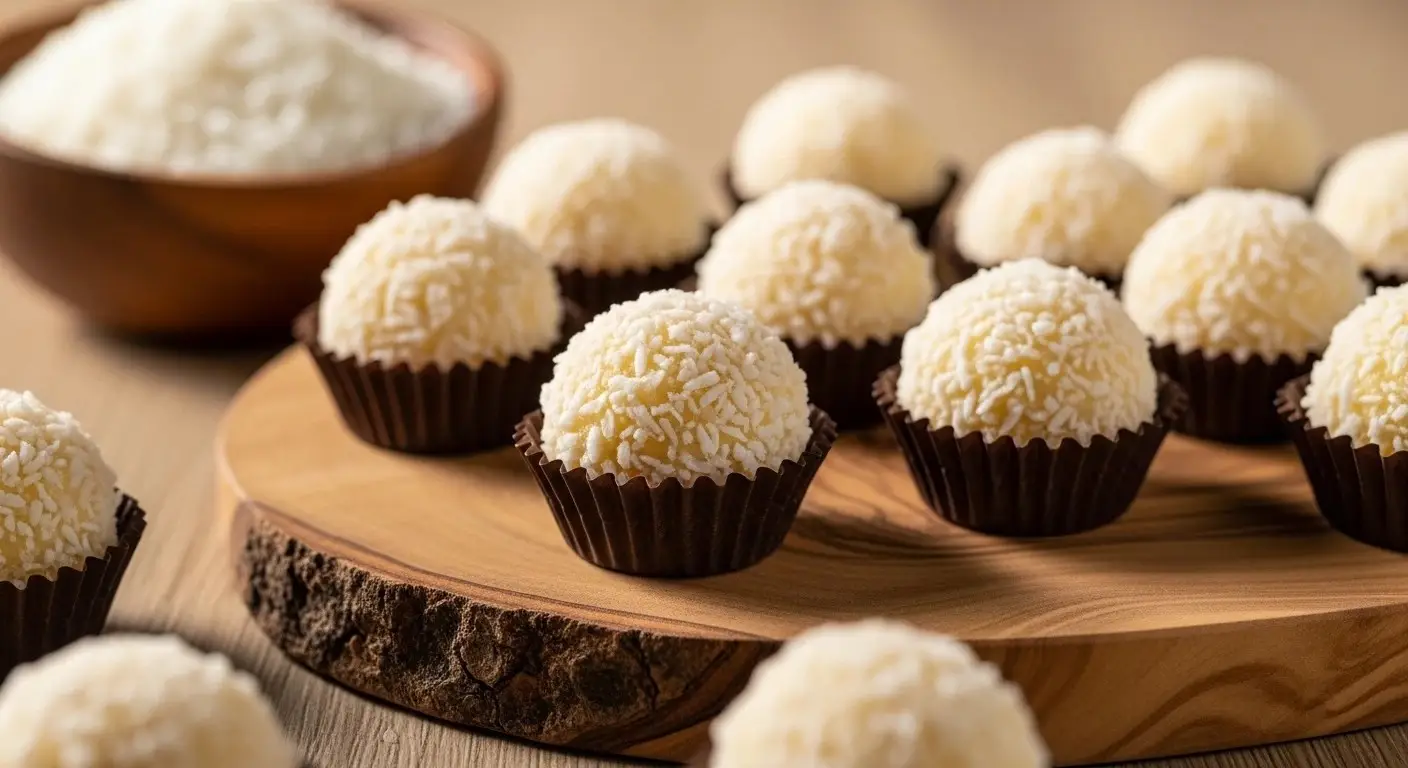
If you’ve tried a coconut brigadeiro recipe before and ended up with a sticky mess that wouldn’t roll into balls, you’re not alone. Beijinho — Portuguese for “little kiss” — looks simple, but it comes down to one skill: cooking it on low heat and knowing exactly when to stop stirring.
Get that right, and you’ve got a creamy, coconut-coated candy that shows up at nearly every Brazilian birthday party, usually right next to its chocolate cousin, brigadeiro.
Both start from the same base — condensed milk and butter cooked down until thick — but beijinho swaps cocoa for shredded coconut. Coconut behaves a little differently on the stove: it thickens a bit faster than cocoa does, and it adds texture from the coconut fiber itself, not just flavor. That’s why beijinho can sometimes catch beginners off guard — it can go from “not ready yet” to “just right” more quickly than chocolate brigadeiro does.
18–20
servings 10-12 (2 pieces per serving)10
minutes15
minutes1 can (14 oz / 395 g) sweetened condensed milk
1 tbsp butter, plus extra for greasing your hands
¾ cup shredded or desiccated coconut
1 tsp vanilla extract (optional, but adds real depth)
Pinch of salt
1 cup shredded coconut, for coating
Optional: whole cloves, for the traditional garnish
Combine everything cold. Add the condensed milk, butter, coconut, vanilla, and salt to the saucepan before turning on the heat.
Cook on low heat, stirring constantly. Keep the heat low and stir slowly but continuously, scraping the bottom and corners of the pan. This is the single most important thing to get right — high heat cooks the outside faster than the inside, which is what causes a grainy, separated texture instead of a smooth one.
Watch for the doneness signs. After about 12–18 minutes, the mixture will look glossy and noticeably thicker. Drag your spatula through the center — if the pan is briefly visible before the mixture flows back together, and the mixture gathers into one mass that pulls cleanly away from the pan, it's ready.
Cool before shaping. Spread the mixture onto a lightly greased plate so it cools faster and evenly. Let it cool until just warm, not hot — trying to roll it while still hot will just stick to your hands.
Grease your hands lightly with butter, then roll them into small, even balls — about a tablespoon each.
Coat in coconut. Roll each ball in shredded coconut until fully covered. In humid weather, a second light coating helps it hold up longer before serving.
Beijinho traces back to Portugal, where a similar sweet called “beijo de freira” (nun’s kiss) was made in convents using almonds and sugar syrup. When the Portuguese brought the recipe to Brazil, it was adapted with coconut — a defining ingredient of Brazilian cooking — and renamed “beijo de coco.” The recipe took its current form in the 20th century once sweetened condensed milk became widely available, giving it the smooth, fudgy texture it’s known for today.
About a week in the refrigerator in an airtight container, or 2–3 days at room temperature if your kitchen isn’t too warm. Humidity can soften the coconut coating faster, so refrigeration is safer in hot climates.
Yes. Freeze the uncoated balls on a tray until firm, then transfer to an airtight container for up to 3 months. Thaw in the fridge and coat in fresh coconut before serving.
Yes, though fresh coconut adds more moisture, so it may take a few extra minutes on the heat to reach the same thick, glossy stage. Watch for the same doneness signs rather than going by time alone.
It’s likely undercooked, or you tried rolling it while still warm. Cook it a couple minutes longer, watching for it to pull cleanly from the pan, and let it cool fully before shaping.
Yes, typically — it’s made from condensed milk, butter, and coconut, with no wheat involved. Double-check labels if you’re cooking for someone with celiac disease, since cross-contamination can occur during coconut processing.
Yes, though butter helps prevent sticking in the pan and gives a slightly smoother texture. Without it, use a nonstick pan and stir a bit more attentively.
Once you get comfortable with the low-heat cooking and the visual doneness cues, a coconut brigadeiro recipe becomes one of those treats you can make from memory. The two things to remember: keep the heat low and patient, and let the mixture cool before you try to shape it. From there, the classic coconut coating and clove garnish are what make it recognizably Brazilian.