
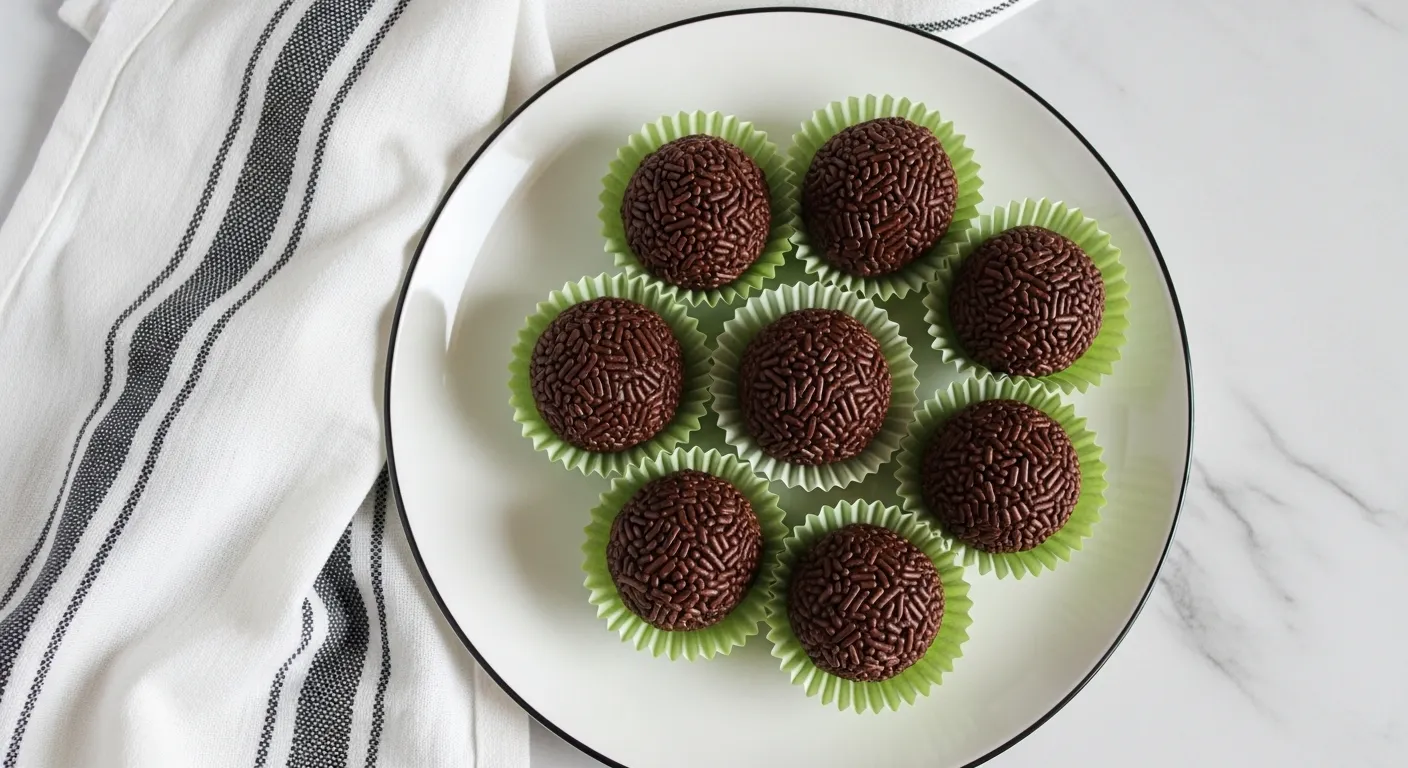
Brigadeiro Recipe: How to Make Brazilian Chocolate Truffles

Brigadeiro Recipe: How to Make Brazilian Chocolate Truffles

If you’ve ever wanted a dessert that feels fancy but uses pantry basics, this brigadeiro recipe is the one. You cook sweetened condensed milk, cocoa powder, butter, and a pinch of salt into a glossy, thick paste, then roll it into bite-size “Brazilian chocolate truffles” that disappear fast at parties. It’s the kind of stovetop sweet that looks like you spent hours, even though the active work is mostly stirring.

I’ve made brigadeiros for birthday tables, quick gifts, and last-minute cravings, and the biggest secret is not a rare ingredient. It’s controlling low heat and knowing the exact moment the mixture is ready to come off the pan. Once you learn that doneness point, you can make classic chocolate, brigadeiro branco, spoonable versions, and “gourmet brigadeiro” flavors without relearning the whole technique.

Let’s get you to a batch that’s smooth, rollable, and coated in sprinkles like the real thing.

What Is a Brigadeiro Recipe?

A brigadeiro recipe is a Brazilian confection method that turns sweetened condensed milk, unsweetened cocoa, butter, and salt into a thick paste cooked on low heat, then cooled and shaped into small balls. The paste is done when it pulls cleanly from the pan and holds a brief spatula trail before closing.

Brigadeiro is a type of confection in the broader family of chocolate truffles, but it’s its own thing: fudgy, chewy, and deeply chocolatey without needing cream. In Brazil, you’ll see classic chocolate brigadeiro alongside variations like traditional chocolate brigadeiro, spoon brigadeiro (de colher), and the lighter “white” style, brigadeiro branco, which skips cocoa and leans on dairy and vanilla.

You’ll often hear an origin story tied to Brigadeiro Eduardo Gomes, whose name became linked to the candy’s popular rise. Whether you’re cooking in Rio de Janeiro or São Paulo, the modern brigadeiro is now a national staple: a simple saucepan sweet that shows up everywhere from kid birthdays to elegant dessert gift boxes.

One more language note that helps avoid confusion: “brigadeiro” can also mean a military rank (similar to “brigadier”) in Portuguese, so in recipes it’s usually paired with “candy,” “dessert,” or “recipe” to keep the meaning clear.

Brigadeiro Recipe: Coconut Cake
 

A classic brigadeiro recipe is the perfect sweet treat to serve alongside Coconut Cake, creating a rich and indulgent dessert pairing. These soft, chocolate fudge bites add deep cocoa flavor that beautifully complements the light, tropical sweetness of Coconut Cake. Serving a brigadeiro recipe with coconut cake brings balance, texture, and a true taste of Brazilian celebration to any dessert table.

How Does a Brigadeiro Recipe Work?

Think of brigadeiro as controlled thickening. Sweetened condensed milk already has concentrated dairy and sugar, so when you warm it with cocoa and butter, you’re building a tighter sugar matrix as water reduces and viscosity climbs. That’s why a steady micro-simmer viscosity control matters: you want a gentle, even cook, not an aggressive boil that scorches the bottom.

Here’s what’s happening in the pan:

  • Sweetened condensed milk provides the body and sweetness that will set as it cooks.
  • Unsweetened cocoa powder gives chocolate flavor and color without adding more sugar (sweetened cocoa mixes can oversweeten and throw off balance).
  • Butter keeps the mixture silky and helps prevent sticking by supporting a stable emulsion. That “glossy mass” look is your emulsified sheen checkpoint.
  • A tiny pinch of salt keeps the chocolate flavor from tasting flat.

The technique is simple, but the execution has two non-negotiables: a heavy-bottom saucepan (the hot-spot scorch prevention loop is real) and near-constant stirring with a spatula. A silicone spatula is ideal because it scrapes corners cleanly where burned residue likes to hide.

The most reliable doneness tests

You’ll see “cook until thick,” but that’s vague. Instead, use these:

  1. Pan-release test (doneness test): scrape the bottom; the paste should gather into a single mound and briefly expose the pan surface.
  2. Spatula trail closure test: drag the spatula through the middle; the line should stay open for a second, then slowly close.
  3. Pulls from pan stage: tilt the pan slightly; the mass should slide as one piece instead of flowing like sauce.

If you stop early, you get a sticky, soft-set paste that won’t roll. If you go too far, you risk an overcooked, crumbly texture (soft-set vs overcooked is the difference between dreamy and dry).

The Best Easy Brigadeiro Recipe
Recipe
Brigadeiro Recipe — BrazilEats
🌿 BrazilEats
🍫 Brazilian Dessert

Brigadeiro
Chocolate Truffles

The easiest version for beginners — forgiving, fudgy, and deeply chocolatey. Just 4 ingredients and a saucepan.

🍬 Makes 18–24 truffles
Cook: 8–12 min
❄️ Cool: 20–30 min
🇧🇷 Brazilian
Adjust Batch
base = 21 truffles
21

Ingredients

Main Ingredients
395 g
sweetened condensed milk (1 can / 14 oz)
Leite Moça by Nestlé is the classic Brazilian choice
2 tbsp
unsweetened cocoa powder
Guittard or Valrhona for deeper chocolate flavor
1 tbsp
butter (plus a little extra for hands and plate)
pinch
salt
Coating & Extras
as needed
chocolate sprinkles (or chopped nuts / coconut) for coating
1 tsp
vanilla extract
Add at the very end, off heat, for best flavor
optional

Equipment

🍳
Heavy-bottom saucepan
🥄
Silicone spatula
🍽
Plate or shallow dish for cooling
🧁
Truffle cup papers (optional)

Method

1
Mix Cold First

Off heat, whisk condensed milk and cocoa in the saucepan until smooth.

💡 This prevents cocoa lumps and reduces scorching risk later.
2
Add Butter and Salt

Turn heat to low. Add butter and salt. Start stirring immediately.

🔥 Keep heat on low throughout. High heat burns sugars and causes fat separation.
3
Stir Continuously

Keep the spatula moving, scraping the corners and bottom of the pan at all times.

💡 Continuous stirring vs intermittent stirring is the difference between silky and scorched.
4
Cook to the Right Texture

After about 8–12 minutes, the paste will turn darker and glossy.

Do the pan-release test: scrape the bottom — if it pulls cleanly and forms a cohesive ball, you're there.

✅ You can also do the spatula trail test: drag through the middle — the line should stay open for a second, then slowly close.
5
Cool Before Rolling

Spread onto a lightly buttered plate. Let it cool until barely warm and firm enough to handle, about 20–30 minutes.

⚠️ Cooling time is not optional. If it's warm, it smears and sticks.
6
Butter Your Hands, Then Roll

Use buttered hands to roll into balls. Then coat in sprinkles or your coating of choice.

🤌 Buttered hands vs dry hands makes rolling smooth and prevents sticking.
7
Serve

Place into truffle cups or on a platter.

🎁 For gift boxes or parties, chill rolled balls for 10 minutes before coating for better sprinkle adhesion.

Easy Upgrades

🍫
Richer Chocolate
Swap cocoa for a mix of cocoa and finely chopped dark chocolate. Stir in at the end, off-heat.
Coffee Brigadeiro (de Café)
Add 1–2 teaspoons instant espresso powder while cooking for brigadeiro de café.
🥜
Peanut Crunch (de Paçoca)
Coat with crushed paçoca for brigadeiro de paçoca vibes — crunchy, nutty, irresistible.

Notes

🍬
Yield
Makes ~18–24 small truffles
🔥
Cook Time
8–12 minutes on low heat
🏠
Storage
Airtight container, up to 2 days at room temp; or refrigerate up to 1 week
❄️
Freezing
Freeze fully cooled in layers with parchment. Thaw in fridge overnight
🎉
Serving Tip
Perfect for birthday tables, dessert gift boxes, and Festa Junina. Truffle cups standardize portions and make them look professional.
Best Equipment For Brigadeiro

What Equipment Do You Actually Need to Make Brigadeiro at Home?

Most people grab the nearest pan they have and hope for the best. Sometimes it works. Most of the time, the brigadeiro sticks to the bottom, burns in patches, or stays too soft to roll. The pan is almost always the reason.

Brigadeiro is a high-sugar mixture. Sugar conducts heat aggressively and punishes thin, uneven cookware. When the bottom of your pan is thin, certain spots on the burner get hotter than others — and those hot spots scorch the condensed milk before the rest of the mixture has even thickened. You end up scraping burned bits off the bottom and stirring them back in, which ruins the flavor.

A heavy-bottom non-stick saucepan is the one piece of equipment that changes everything about making brigadeiro. The weight of the base distributes heat evenly across the entire surface. There are no hot spots. The mixture heats gradually, thickens consistently, and lifts cleanly off the pan when you stir. If you have ever wondered why your brigadeiro does not taste quite like the ones at a Brazilian birthday party — the pan is probably why.

The size matters too. A 2-quart saucepan is the sweet spot for a standard batch of 20 to 25 brigadeiros. A pan that is too large spreads the mixture too thin and it cooks too quickly, making it difficult to control the texture. A pan that is too small causes the mixture to bubble up and overflow when the heat builds. Two quarts gives you the right depth for proper stirring and even thickening.

Beyond the pan, the tools you use during and after cooking make a real difference in how the final brigadeiros look and feel.

Top pick
Heavy-Bottom Non-Stick Saucepan (2-quart)

The most important purchase for brigadeiro success. Even heat, easy stirring, clean release.

The Tools
Tool 1

A heat-resistant silicone spatula

lets you stir constantly without scratching the non-stick surface. Metal spoons damage the coating over time and eventually leave tiny flakes in your food. Silicone handles the high sugar heat without melting and reaches the curved bottom edges of the pan where sticking is most likely to happen.

Tool 2

A small cookie scoop — the 1-tablespoon size

is the tool most home cooks skip and then regret. Rolling brigadeiro by hand is messy and produces uneven balls. A cookie scoop portions the cooled mixture cleanly and quickly, giving you rounds that are consistent in size, which means they roll more evenly and look far more professional in the paper liners.

Tool 1

Mini paper cupcake liners

are the traditional presentation. Brigadeiros look completely different sitting in a small paper liner versus placed directly on a plate. The liner holds the shape, prevents them from sticking together, and gives them that party-ready look that makes people reach for them immediately.

Best Pan for Brigadeiro

The Best Pan for Brigadeiro: What to Look for Before You Buy

If you search for pans online, the options are overwhelming and most descriptions do not tell you what actually matters for brigadeiro specifically. Here is what to look for so you do not waste money on something that will not work.

The most important feature is a heavy base — not a brand name. A heavy base means the metal is thick enough to absorb and distribute heat rather than just passing it straight through from the burner. Pick the pan up before you buy it. If it feels light and flimsy, it will behave that way on the stove.

Non-stick coating is non-negotiable for brigadeiro. The condensed milk and sugar in this recipe are extremely sticky. Even a well-seasoned stainless pan will have the mixture welding itself to the surface by the time you reach the right consistency. Non-stick makes the cooking process calm and controlled instead of a constant battle.

Avoid pans with a small flat base and tall straight sides. These are designed for sauces and soups, not for recipes that need constant circular stirring. You want a pan where the base is wide enough for your spatula to sweep across the entire bottom in one motion, with sides that are just tall enough to contain the mixture when it bubbles.

Tramontina is worth mentioning here because it is a Brazilian brand and genuinely excellent for this recipe. It is widely available on Amazon, reasonably priced, and the non-stick surface holds up well to the kind of constant stirring that brigadeiro requires. That said, any heavy-bottom non-stick 2-quart saucepan from a reputable brand will serve you well.

One more thing — let your pan cool completely before washing it after making brigadeiro. The sugar residue looks alarming but soaks off easily with warm water. Plunging a hot non-stick pan into cold water warps the base over time, which defeats the entire purpose of buying a heavy-bottom pan in the first place.

Shop This Recipe

Shop This Recipe: Everything You Need to Make Brigadeiro

These are the exact tools and ingredients that make brigadeiro work the way it should. Every item below is available on Amazon so you can pull the whole setup together in one order.

Heavy-Bottom Non-Stick Saucepan (2-quart)
The pan
The Pan: Heavy-Bottom Non-Stick Saucepan (2-quart)

The most important purchase for brigadeiro success. Even heat, easy stirring, clean release.

Small Cookie Scoop (1 tablespoon)
Cookie Scoop

for portioning the cooled mixture into equal rounds before rolling. Keeps your hands clean and your brigadeiros uniform.

Mini Paper Cupcake Liners
Paper Cupcake
Mini Paper Cupcake Liners

The traditional presentation. Makes every brigadeiro look like it came from a Brazilian candy shop.

Shallow Plate or Dish
Shallow Plate
Shallow Plate or Dish

For spreading the cooked mixture to cool before rolling. Any flat dish works, but a wider surface cools the mixture faster.

Sweetened Condensed Milk
The Key Ingredient
Sweetened Condensed Milk

the heart of every brigadeiro. Nestle La Lechera is the most consistent brand for this recipe. Buying a multipack saves money if you plan to make brigadeiro more than once

Unsweetened Cocoa Powder
Cocoa Powder
Unsweetened Cocoa Powder

use a good quality Dutch-processed cocoa for the richest chocolate flavor. The quality of cocoa powder is the one ingredient swap that noticeably changes the final taste.

Variations That Keep the Same Base Technique

Once you nail the base, you can change the personality of the candy without changing the science. That’s why brigadeiro is such a high-success beginner sweet: the method stays stable, and the flavors flex.

Brigadeiro branco (the “white” version)

Brigadeiro branco skips cocoa powder, so you’re leaning on dairy sweetness and any infusion you add. The key is not to cook it on high heat, because without cocoa you’ll notice caramelization faster. Finish it with coconut, crushed cookies, or pistachio.

Spoonable vs rollable endpoint

Not everyone wants to roll. If you pull the mixture off the stove a minute earlier, you get spoon brigadeiro (de colher): soft, glossy, and perfect in a ramekin with sprinkles on top. This “spoonable vs rollable endpoint” is also a smart save if you’re unsure you hit the exact rolling stage.

Coatings and inclusions that change flavor most

Coatings are not just decoration. Particle size changes mouthfeel, and fresh vs stale matters more than people think.

  • Chocolate sprinkles: classic, but choose fresh ones for crisp bite (fresh sprinkles vs stale sprinkles).
  • Toasted coconut: gives beijinho energy, a cousin confection that is often coconut-forward.
  • Finely chopped nuts: pistachio or hazelnut adds “gourmet” texture. Think brigadeiro de pistache.

Humidity, Coating Adhesion, and Gift-Box Results

What most guides skip is the part that makes brigadeiros look “professional”: coating adhesion and consistency across a batch. If you’ve ever rolled perfect balls and then watched sprinkles slide off, you’ve met humidity and temperature.

Here’s the trick: brigadeiro coating sticks best when the surface is cool, slightly tacky, and lightly greased, not wet. In humid weather, sprinkles can feel waxy and clump, which reduces adhesion. A simple humidity-aware coating adhesion fix is to chill the rolled balls for 10 minutes, then coat them in fresh sprinkles in small batches. You’ll get a better grip and a cleaner finish.

This matters a lot if you’re packing brigadeiros into dessert gift boxes or setting them out for Festa Junina tables where they sit longer. For consistent portions, use truffle cups to standardize size and presentation. It sounds small, but it’s the difference between “homemade candy” and “party-ready confectionery.”

If you’re curious about how sweets fit into labeling and definitions globally, the Codex Alimentarius Commission sets international food standards that influence how ingredients like cocoa products and dairy concentrates are defined across markets, which is why condensed milk and cocoa labeling can vary by country.

For the full picture of regional sweets and where brigadeiro fits, see our complete guide to Brazilian desserts

Practical Tips That Make Brigadeiro Easy Every Time

A few habits make this recipe feel almost automatic:

  • Use a heavy-bottomed saucepan. Thin pans create hot spots, which drives scorching and grainy texture.
  • Keep heat at a smooth simmer, not an aggressive boil. Gentle heat gives you control and reduces splatter and burning.
  • Stir with a silicone spatula and scrape the edges often. Corners are where caramelization starts.
  • If you want to add flavor (zest, extracts), add it at the end off-heat so it rides the butterfat phase and stays aromatic.
  • For faster cooling, spread the paste thin on a buttered plate (a simple cooling slab heat-dissipation hack).

Common Mistakes to Avoid

Most failures come from speed, not skill.

  1. High-heat cooking. High heat vs low heat is the biggest contrast here. High heat burns sugars and can force fat separation, leaving an oily, grainy mass.
  2. Stopping stirring “just for a second.” Intermittent stirring increases sticking and scorching. Keep the spatula moving and scrape the pan.
  3. Rolling too soon. Room temperature vs chilled matters. If it’s warm, it smears and sticks; if it’s cold and hard, it can crack. Aim for cool and pliable.
  4. Using sweetened cocoa mix. Unsweetened cocoa vs sweetened cocoa mix changes sweetness calibration and texture. Use unsweetened cocoa for predictable results.

If you do end up with a grainy mixture, don’t panic. Often you can rescue it by lowering the heat, adding a tiny splash of water or a small knob of butter, and stirring until it looks glossy again (a simple fat separation rescue protocol).

Frequently Asked Questions About a Brigadeiro Recipe

Brigadeiros last at room temperature for about 2 days if stored in an airtight container away from heat and sunlight. Room temperature storage works best when your kitchen is cool; in warmer climates, they can soften too much. For a longer shelf life, refrigerate and let them sit a few minutes before serving so the texture isn’t overly firm.

You can freeze brigadeiros without ruining the texture if you freeze them after they’re fully cooled and coated. Place them in a single layer to firm, then transfer to an airtight container with parchment between layers. Thaw in the fridge overnight, then bring to room temperature briefly so the centers return to that soft, fudgy bite.

You can make brigadeiro without cocoa powder by making brigadeiro branco. The method is the same: condensed milk and butter cooked on low heat until it reaches the pulls-from-pan stage. Without cocoa, the flavor is milky and sweet, so many people add vanilla, citrus zest, or finish with coconut flakes for a more balanced taste.

The best substitute for sweetened condensed milk is a thick plant-based condensed milk if you need dairy-free, because it mimics the same concentrated sweetness and body. You can also simmer milk and sugar down yourself, but consistency varies and it can crystallize. For the most predictable brigadeiro recipe results, use a true condensed-style product.

If your brigadeiro won’t roll into balls, it’s usually undercooked or not cooled enough. Under-cooked paste stays sticky and never sets; cook a bit longer on low heat while stirring until it passes the pan-release test. If it’s cooked correctly but still sticky, let it cool longer and butter your hands before shaping.

You can make brigadeiro in the microwave by cooking the condensed milk, cocoa, and butter in a large microwave-safe bowl in short bursts, stirring well each time. It’s faster, but scorching can happen around the edges, so keep power moderate and stir thoroughly. The same doneness rules apply: look for thickening and a clean pull from the bowl.

Conclusion & Next Step

Once you understand the low-heat thickening and the “pulls from the pan” stage, a brigadeiro recipe becomes one of the easiest party desserts you can keep in your back pocket. It’s simple, flexible, and ridiculously rewarding, especially when you nail that glossy, rollable texture.

Share this post:
Santos Camila​

Santos Camila​

My name is Camila Santos, and food has been the center of my world for as long as I can remember. I grew up watching my grandmother cook in a small kitchen

Leave a Reply

Your email address will not be published. Required fields are marked *