
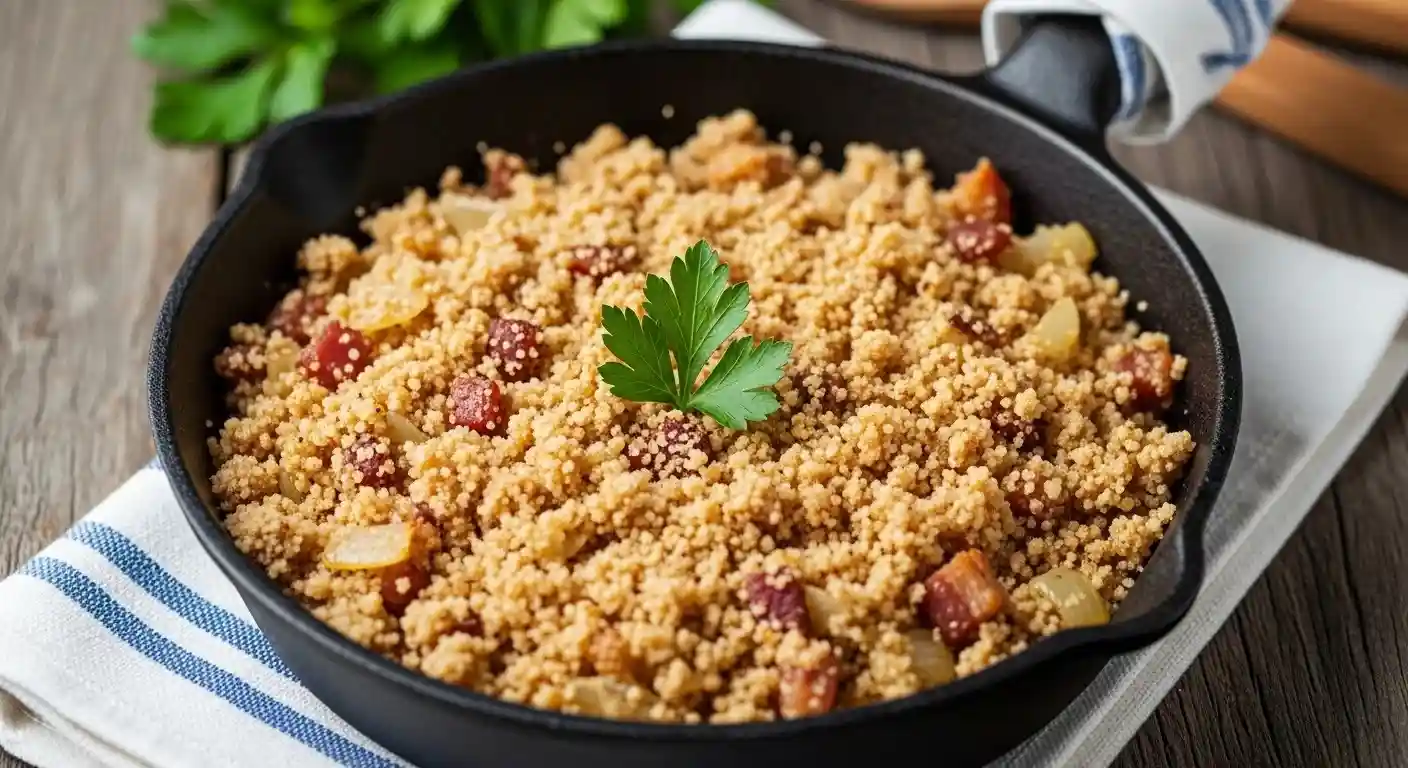
Farofa Recipe: A Classic Toasted Cassava Flour Side

Farofa Recipe: A Classic Toasted Cassava Flour Side

A well-made farofa recipe transforms simple cassava flour into a warm, nutty, crumbly side that brings balance to rich meals. This toasted cassava flour side dish sits at the heart of Brazilian cooking and regularly appears beside grilled meats, bean stews, and holiday roasts. It adds texture where plates feel heavy and absorbs juices without turning soggy. Once you understand the method, it becomes one of the most versatile sides in your kitchen.

Farofa belongs to the broader family of grain and starch-based accompaniments, much like stuffing, couscous, or seasoned breadcrumbs. Yet its flavor profile and sandy texture make it completely distinct.

What Is Farofa and How Is It Traditionally Used?

Farofa is a savory side dish made by toasting cassava flour in fat with aromatics until golden and fragrant. In Brazil, it is considered essential at gatherings, especially during churrasco barbecues and festive meals. Its role is simple but powerful: balance rich foods with dryness and crunch.

Cassava flour comes from the cassava root, a starchy tuber cultivated in tropical regions. Indigenous communities in Brazil processed cassava long before colonial influence, and the ingredient remains foundational in Brazilian food culture today. The flour is dried, coarse, and slightly gritty, which gives the finished dish its signature texture.

There are two main varieties you’ll encounter:

  • White cassava flour (farinha branca) – lighter in flavor and softer in texture
  • Toasted cassava flour (farinha torrada) – deeper color and nuttier taste

Both produce excellent results, but pre-toasted flour creates a more pronounced roasted flavor. Traditional versions use pork fat or butter, while modern adaptations sometimes rely on olive oil for a lighter finish. Simple vs. elaborate preparations both work, depending on the meal.

One insight from experience: farofa is not meant to overpower. Its strength lies in restraint. When done correctly, it supports the main dish rather than competing with it.

A traditional farofa recipe is the perfect finishing touch when serving Feijoada, adding texture and a subtle toasted flavor to the plate. Made from toasted cassava flour and often mixed with garlic, onions, or bacon, farofa brings a light crunch that balances the rich, slow-cooked flavors of Feijoada. Sprinkling a generous spoonful of farofa recipe over your Feijoada not only enhances every bite but also keeps the meal true to classic Brazilian tradition.

A Classic Toasted Cassava Flour Side Dish: Farofa Recipe
Recipe
Farofa Recipe — BrazilEats
🌿 BrazilEats
🌾 Cassava Flour Side Dish

Farofa
Toasted Cassava

Fluffy, sandy, nutty — the essential Brazilian side dish that brings texture contrast to every plate. Simple technique, big flavor.

👥 Serves 4–6
Prep: 10 min
🔥 Cook: 15 min
🌾 Gluten-Free
🇧🇷 Classic Brazilian
Adjust Servings
base = 5 servings
5

Ingredients

Core Ingredients
2 cups
cassava flour
Also called farinha de mandioca — not tapioca starch, not cassava flour for baking
3 tbsp
unsalted butter or bacon fat
1 small
yellow onion, finely diced
2 cloves
garlic, minced
4 slices
bacon, chopped
optional
to taste
salt
handful
fresh parsley, chopped
Optional Variations
2 tbsp
diced ripe banana
farofa de banana
1
egg, lightly beaten
farofa com ovo
2 tbsp
toasted cashews or Brazil nuts
optional

Why Each Ingredient

🌾
Cassava FlourThe base — forms the sandy, crumbly texture that defines farofa
🧈
Fat (Butter/Bacon)Coats each granule for even browning — prevents clumping
🧅
OnionSweetness and depth as it caramelizes in the fat
🧄
GarlicBuilds aroma — added late so it doesn't burn
🥓
BaconSmokiness, depth, and extra fat for flavor
🌿
ParsleyFresh finish — folded in at the very end

Variations

🥓
Classic
Butter, onion, garlic, bacon, parsley. The essential version.
🥚
Com Ovo
Soft scrambled egg folded in at the end for extra richness.
🍌
De Banana
Diced ripe banana adds sweetness and contrast to the savory base.

Instructions

1
Heat the Pan & Cook Bacon

Place a wide skillet over medium heat. Add chopped bacon and cook until crisp. Remove bacon and set aside, leaving about 2 tablespoons of fat in the pan.

💡 Skipping bacon? Melt butter until it foams gently — that foam tells you it's hot enough. This is the moment to move to the next step.
⚠️ Professional tip: always heat the fat fully before adding flour. If the pan is too cool, the flour absorbs grease instead of toasting — that's the difference between light and greasy texture.
2
Sauté Onion

Add diced onion to the hot fat. Cook 4–5 minutes until translucent and lightly golden.

💡 The onion sweetens as it caramelizes in the fat. Don't rush this step — underdone onion tastes sharp and raw in the finished farofa.
3
Add Garlic

Stir in minced garlic and cook for 30 seconds until fragrant.

⏱ 30 seconds only — garlic burns fast at this heat and turns bitter. Pull forward immediately after the aroma blooms.
4
Toast the Cassava Flour

Gradually sprinkle in cassava flour while stirring continuously. Keep stirring for 5–8 minutes.

The flour should shift from pale to light golden and release a nutty aroma.

Color & Doneness Guide
Pale (under) ✅ Light Golden Dark (over)
✅ Texture check: should feel crumbly and dry but not brittle. If overly dry → add 1 tsp butter. If heavy → toast slightly longer.
5
Season & Finish

Taste and adjust salt. Fold in bacon and parsley just before removing from heat.

🌿 Parsley goes in at the very end — heat wilts it fast. Fold once or twice and serve immediately for best color and freshness.

Notes

🍽
How to Serve
Spoon alongside feijoada, grilled picanha, or moqueca. Unlike stuffing or breadcrumbs, farofa is intentionally dry — it acts as edible texture contrast that soaks up meat juices and broth on the plate.
🌡️
Heat Control
Medium heat throughout. Too high = burnt flour. Too low = greasy, untoasted result.
📦
Storage
Store in an airtight container at room temp for up to 3 days. Re-toast briefly in a dry pan to refresh.
🌾
Flour Note
Use farinha de mandioca (toasted or raw). Not tapioca starch, not all-purpose flour.
🥓
Vegetarian
Skip bacon and use butter. Add a splash of olive oil for extra depth. Still delicious.

What to Serve with This Cassava Flour Dish

Farofa shines when paired with bold, juicy foods. Its dry texture absorbs sauce and meat juices while maintaining structure.

Traditional pairings in Brazil include:

  • Feijoada – a black bean and pork stew often considered Brazil’s national dish
  • Picanha – a cut of top sirloin cap popular in Brazilian barbecue

Feijoada is widely recognized as a defining element of Brazilian culinary identity, and farofa typically accompanies it to provide contrast against the stew’s richness.

In the USA and UK kitchens, try serving it with:

  • Roast chicken
  • Grilled sausages
  • Slow-cooked brisket
  • Pan-seared salmon
  • Beans and rice bowls

It also works beautifully over roasted vegetables, especially squash or carrots. The crumb catches in crevices and adds crunch to soft textures.

The contrast between moist vs. dry and tender vs. crumbly creates balance in almost any meal.

Regional Styles and Modern Twists

Across Brazil, families adapt the dish to local tastes and available ingredients.

In Bahia, cooks often use palm oil for deeper color and earthy flavor. In southern regions, bacon-heavy versions are common at barbecue gatherings. Some home cooks add grated carrots for moisture and sweetness.

Modern kitchens sometimes experiment with:

  • Dried cranberries for tart contrast
  • Smoked paprika for depth
  • Fresh herbs like cilantro instead of parsley

Traditional versions emphasize simplicity. Modern ones introduce complexity. Both approaches respect the same base method.

A practical insight rarely discussed: reheating in a dry skillet restores texture far better than microwaving. Gentle heat re-crisps the flour without drying it out completely.

Nutrition and Dietary Considerations

Cassava flour is naturally gluten-free, making this dish suitable for people avoiding wheat. However, fat content varies depending on preparation.

A small serving primarily contains carbohydrates, modest fat, and minimal protein unless eggs or nuts are added. For a lighter version, reduce fat slightly and increase onion or vegetable additions. For festive occasions, richer versions are common.

People with cassava allergies should avoid it, though such cases are uncommon. Always check packaging labels if cross-contact with gluten is a concern.

Frequently Asked Questions

Yes. Cassava flour contains no gluten because it comes from a root vegetable, not wheat. Always confirm that the packaging was processed in a gluten-free facility if cooking for someone with celiac disease.

It has a mild, nutty flavor with savory depth from fat and aromatics. The taste depends heavily on what you add. Bacon makes it smoky, while butter creates a softer, rounder flavor.

Absolutely. Replace bacon fat with butter or olive oil. You can add toasted nuts or mushrooms for extra umami and texture without using meat.

Clumping happens when flour is added too quickly or the pan is not hot enough. Add the flour gradually and stir constantly to keep the texture loose.

Yes. Store it in an airtight container for up to two days at room temperature. Reheat gently in a skillet before serving to refresh texture.

Traditionally, it is served warm or at room temperature. It does not need to be piping hot to taste good.

Final Thought

A properly made farofa recipe proves that technique matters more than complexity. With just cassava flour, fat, and aromatics, you create a side that adds structure and balance to rich dishes.

Whether you keep it traditional with bacon or lighten it with olive oil and herbs, this toasted cassava flour side brings texture that most plates lack. Once you master the heat and stirring technique, you’ll find yourself reaching for it whenever a meal needs contrast and depth.

Share this post:
Santos Camila​

Santos Camila​

My name is Camila Santos, and food has been the center of my world for as long as I can remember. I grew up watching my grandmother cook in a small kitchen

Leave a Reply

Your email address will not be published. Required fields are marked *