
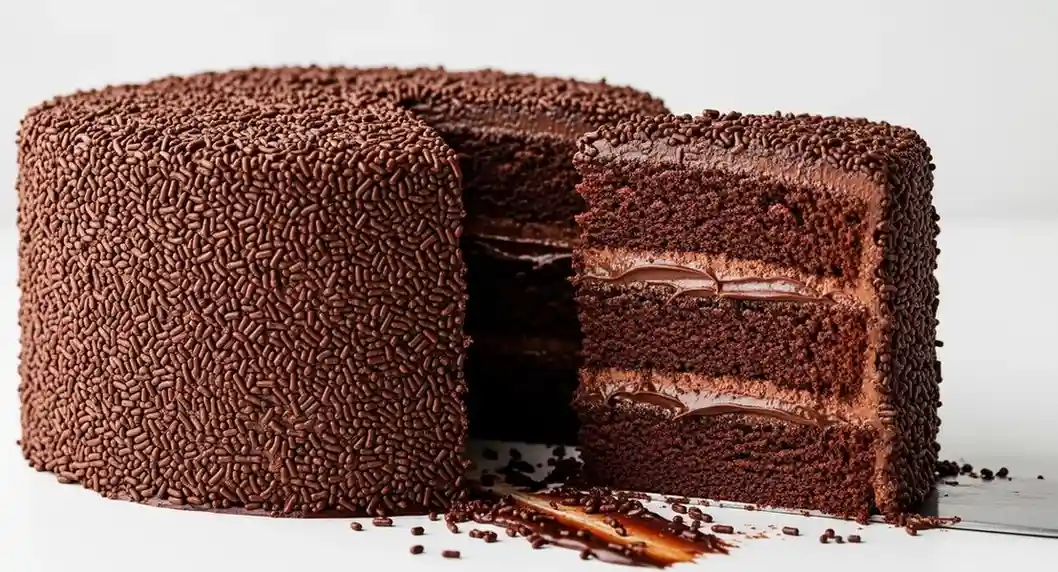
A reliable Brazilian chocolate cake recipe is the kind you can bake on a busy weeknight and still feel proud to serve at a party. It’s rich without being heavy, sweet without turning cloying, and it stays moist long after it cools. Add brigadeiro frosting and you get that signature Brazilian finish: glossy, fudgy, and ridiculously good with chocolate sprinkles.
This isn’t just “another chocolate cake.” The classic bolo de chocolate brasileiro leans on cocoa powder, vegetable oil, and condensed milk to create a tender chocolate crumb and a topping that sets like soft candy. I’ve tested this style in different pans, at different oven temperatures, and with the small tweaks that separate “pretty good” from “where has this been all my life?”
You’ll learn what makes this cake distinct, how the batter behaves, how to dial in brigadeiro texture, and how to avoid the common mistakes that lead to dry texture or runny frosting. Let’s bake.
A Brazilian chocolate cake recipe is a cocoa-forward cake formula known for a moist crumb and a traditional brigadeiro frosting made from sweetened condensed milk, cocoa powder, and butter. It’s part of Brazilian desserts and celebration cakes, and it’s especially common at a Festa de Aniversário, where chocolate cake is practically a tradition on its own.
In the bigger category of chocolate cakes and baked goods, the Brazilian approach often favors oil over butter. That choice matters because oil stays liquid at room temperature, which helps the cake feel soft even a day or two later. Many versions are baked as a sheet cake in a rectangular pan, then topped with a condensed milk chocolate topping that looks like a shiny glaze but eats like a soft truffle layer.
You’ll see specific subtypes everywhere: a chocolate sheet cake Brazilian style for easy slicing, a layered bolo de chocolate for special occasions, and even chocolate cupcakes with brigadeiro for portion-friendly serving. Each one uses the same core ideas: smooth batter, controlled oven baking, and a frosting that lands in that sweet spot between glossy and spreadable. If you want more taste then pair this dish with Brigadeiro.
Here’s the behind-the-scenes reason this cake works: cocoa powder is powerful, but it’s also dry. If you don’t hydrate it well, you can end up with no flavor and a gritty crumb. A strong Brazilian chocolate cake method balances cocoa with enough liquid (milk), fat (oil or butter), and sugar to create a stable chocolate batter that bakes evenly.
Oil is the big difference-maker. Butter tastes amazing, but it firms up as it cools. Oil stays fluid, which supports moisture retention ratio over time. That’s why a slice can still feel tender the next day instead of turning dry-textured and crumbly around the edges.
If you want to take the flavor up a notch, try a simple cocoa bloom activation method: whisk cocoa powder with hot milk (or hot water) for 30 seconds before adding it to the mixing bowl. That quick hydration improves cocoa particle dispersion, which can make the chocolate taste deeper without adding more sugar.
A few key meronyms (parts of the whole) explain the texture:
Milk adds moisture so the batter doesn’t bake up dense.
Brigadeiro is a classic Brazilian confection, so think of brigadeiro frosting as that candy turned into a pourable topping. The standard composition is simple: sweetened condensed milk, cocoa powder, and butter cooked gently until thick. Brands matter here because consistency matters. Many Brazilian kitchens reach for Leite Moça, a sweetened condensed milk product from Nestlé, because it cooks reliably and sets with a smooth sheen.
The key technique is brigadeiro viscosity calibration. You want the mixture thick enough to coat a spoon but not so thick that it turns matte and heavy. If you cook it too long, the frosting becomes stiff and can feel dense rather than creamy. If you stop too early, it stays runny and slides off the cake like a loose chocolate syrup topping.
A good rule: when the brigadeiro pulls away from the bottom of the pot in slow folds and leaves a brief trail, it’s close. Turn off the heat, stir for 30 seconds, then let it cool a few minutes. That cooling window helps condensed milk emulsification stabilize so the frosting stays glossy instead of separating into oily patches.
This is also where the word “glaze” can get confusing. In baking, glaze means a thin topping. Here, brigadeiro looks like a glaze, but it behaves like a soft frosting once it cools. Same word, different meaning depending on context.
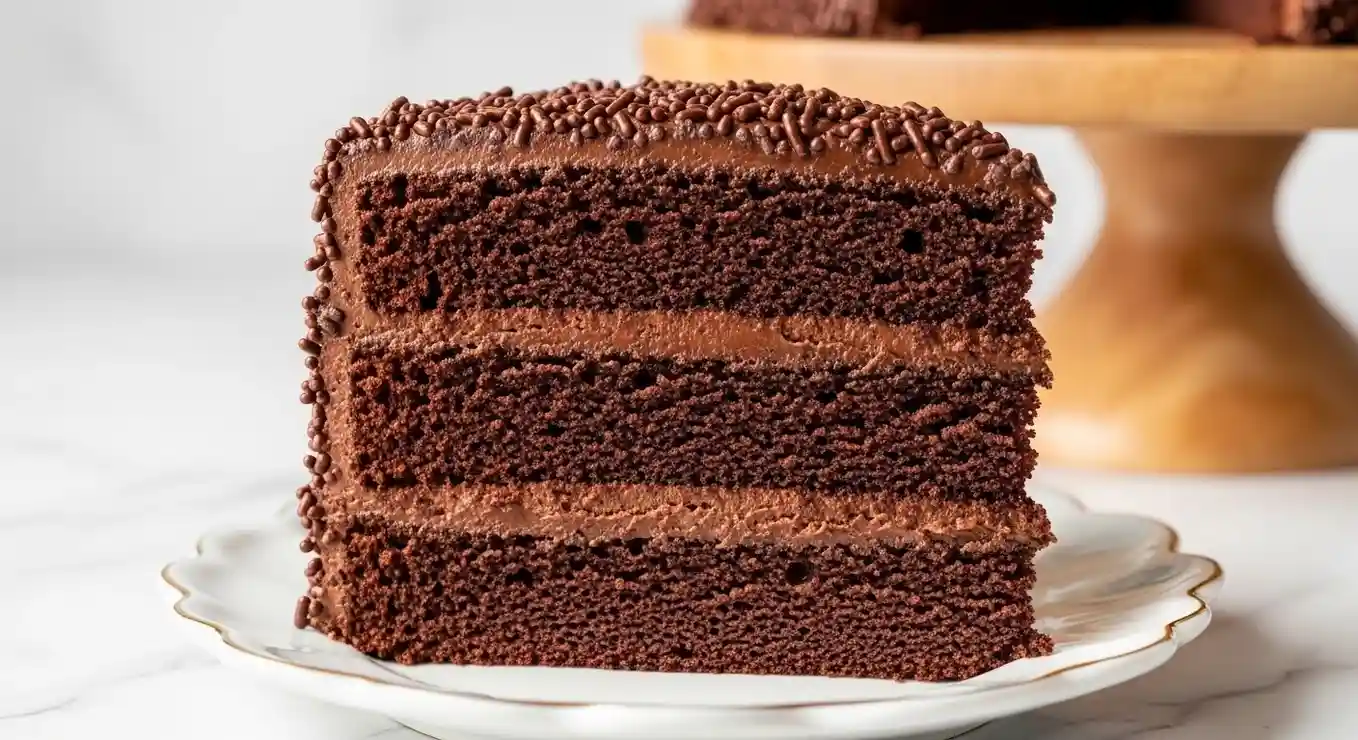
This Brazilian chocolate cake recipe with brigadeiro frosting produces a moist cocoa cake with a glossy chocolate topping that sets like soft fudge. The batter uses oil instead of butter, which keeps the crumb tender even a day or two after baking.
The recipe is traditionally baked in a rectangular pan, then topped with warm brigadeiro and finished with chocolate sprinkles for that classic Brazilian look.
Prep Time
15 minutes
Cook Time
35 minutes
Total Time
50 minutes
Servings
12 slices
Preheat your oven to 350°F (175°C).
Grease a 9×13-inch rectangular baking pan or a medium Pyrex dish and lightly dust with cocoa powder or flour. This prevents sticking and keeps the cake edges clean.
In a large bowl whisk together:
Whisking evenly distributes the cocoa and prevents dry pockets in the batter.
In another bowl beat together:
Whisk until smooth and slightly glossy.
Pour the wet ingredients into the dry ingredients.
Mix gently with a whisk or spatula until a smooth batter forms. Stop mixing as soon as the flour disappears to avoid overdeveloping gluten.
The batter should look fluid and evenly chocolate-colored.
Pour the batter into the prepared pan and spread evenly.
Bake for 30–35 minutes, or until:
Let the cake cool completely on a rack before frosting.
While the cake cools, prepare the classic Brazilian chocolate topping.
In a medium saucepan combine:
Whisk until smooth before heating.
Place the pan over medium-low heat.
Cook while stirring continuously for 8–10 minutes until the mixture thickens.
The correct texture happens when:
This is the perfect brigadeiro frosting consistency.
Remove from heat and let it cool for 3–5 minutes.
This short cooling time allows the frosting to thicken slightly while remaining pourable.
Pour the warm brigadeiro frosting over the cooled cake.
Use a spatula to spread evenly if needed.
Immediately sprinkle chocolate sprinkles over the top so they stick to the glossy frosting.
Let the frosting set for 15–20 minutes before slicing.
Bloom the cocoa for deeper flavor
If you want stronger chocolate flavor, mix the cocoa powder with ¼ cup hot milk before adding it to the batter.
Don’t overbake
Chocolate cakes dry out quickly. Remove the cake once the center is just set.
Watch brigadeiro thickness
Too thin → undercooked
Too thick → overcooked
Aim for a pourable fudge texture.
Let the cake cool before frosting
Warm cake can cause the brigadeiro to melt and separate.
Store Brazilian chocolate cake in an airtight container at room temperature for up to 3–4 days.
For longer storage:
Let chilled slices sit at room temperature for 10–15 minutes before serving so the crumb softens.
What most guides miss is how deeply this cake sits inside Brazilian culinary tradition. In Brazil, chocolate cake isn’t just dessert. It’s social. It shows up at family gatherings, school events, and the afternoon coffee ritual known as café da tarde. In major food cities like São Paulo, you’ll find modern versions that lean darker and less sweet. In Rio de Janeiro, it’s common to see brigadeiro-style toppings piled generously and finished with a thick layer of sprinkles.
There’s also a practical angle that rarely gets mentioned: ingredient standards. ANVISA, Brazil’s national health surveillance agency, regulates food safety and labeling. That affects how cocoa products and condensed milk are standardized in the market. You don’t need to memorize regulations to bake a great cake, but it’s one reason Brazilian pantry staples tend to behave predictably in recipes.
Finally, there’s the equipment reality. Plenty of people mix the batter by hand, but a KitchenAid stand mixer makes quick work of getting a smooth batter without overworking it. For baking, a Pyrex dish is a classic choice for a sheet cake because it holds heat steadily, which can help prevent an underbaked center. If you prefer a metal sheet pan, that’s fine too. Just watch bake time because metal heats faster.
For the wider context of sweets and where this cake fits, here’s our page on Brazilian desserts and Latin American baking traditions
You don’t need fancy tricks, but you do need good habits. These tips prevent the most common “Why didn’t this work?” moments.
Even experienced bakers hit these issues. The fix is usually small.
Mistake 1: A dry texture that crumbles when sliced
Overbaking is the usual culprit. Bake until set, then stop. The cake should spring back lightly and a toothpick should come out with a few moist crumbs, not bone-dry.
Mistake 2: Lumpy batter
Cocoa can clump. Sift it, or bloom it in warm liquid. Lumpy batter often bakes into an uneven texture, and you’ll feel it in the crumb.
Mistake 3: Frosting that’s too thick or too thin
Too thick happens when brigadeiro cooks too long. Too thin happens when it’s undercooked. Watch the texture, not the clock, and let it cool into the frosting setting temperature window before pouring.
Mistake 4: Uneven rise
Old baking powder can sabotage your cake. If the rise looks weak and the center sinks, swap in fresh leavening and avoid opening the oven early.
This section is all about contrasts: moist vs. dry, glossy vs. matte, fluffy crumb vs. dense crumb, evenly baked vs. underbaked center. Once you recognize the pattern, troubleshooting becomes straightforward.
Brazilian chocolate cake lasts 3 to 4 days when you store it in airtight conditions at room temperature. The oil-based formula helps preserve a moist crumb longer than many butter cakes. If your kitchen is very warm, refrigerate, but let slices sit out 15 minutes before serving so the crumb softens again.
You can freeze chocolate cake for up to 2 months. Freeze the cake layer wrapped tightly, then thaw overnight in the fridge. For best results, make brigadeiro frosting fresh after thawing so the glossy finish stays smooth instead of turning slightly grainy.
You can use dark cocoa powder, and it will boost rich cocoa flavor fast. Dark cocoa can also mute sweetness slightly, so taste your frosting and adjust sugar carefully. If your dark cocoa is very strong, a splash of milk can help balance the chocolate flavor depth.
Brigadeiro frosting is made of sweetened condensed milk, cocoa powder, and butter cooked until thickened. That combination creates a creamy, pourable topping that sets like a soft fudge layer. Many Brazilian bakers use Leite Moça because it emulsifies smoothly and produces a shiny finish.
You can make this cake ahead of time by baking it one day early and frosting it the day you serve. The cake actually improves after resting because moisture redistributes through the crumb. Just wrap it well so the surface doesn’t dry out.
Oil keeps chocolate cake moist because it stays liquid as the cake cools. That helps prevent dryness and supports a tender chocolate crumb. Butter can be delicious too, but in this style it can firm up and make the cake feel tighter the next day.
A great Brazilian chocolate cake recipe is about smart texture choices: oil for moisture, cocoa handled with care, and brigadeiro cooked to the right thickness. When those pieces click, you get a cake that feels celebratory without being fussy, whether you bake it as a sheet cake, a chocolate bundt cake Brazilian style, or even a brigadeiro-topped cupcake batch.
Your next step: bake the cake in a simple rectangular pan, practice your brigadeiro viscosity calibration, and finish with chocolate sprinkles the way Brazilian home bakers do.
For more ideas, variations (including gluten-free Brazilian chocolate cake and vegan Brazilian chocolate cake), and the bigger picture, visit our complete guide to Brazilian desserts

Through Brazil Eats, I share authentic Brazilian recipes inspired by family traditions and everyday cooking.