
Traditional vs Chocolate-Based: Getting the Texture Right
A lot of people assume white brigadeiro is “easier” because there’s no cocoa. In some ways, yes. But it’s also less forgiving if you crank the heat. The biggest contrast pair is low heat vs high heat. Low heat gives you a smooth consistency; high heat tends to scorch the sugars and destabilize the fat, leading to a separated mixture that looks oily.
This matters because brigadeiro depends on emulsion. You’re not just boiling something down. You’re controlling a low-temperature reduction curve where sugars, dairy solids, and fats stay integrated. Continuous stirring keeps the bottom from catching and helps prevent sugar crystallization avoidance issues that create graininess.
Here’s a quick, real-world guide to the “set” stage (and yes, “set” can mean “firm texture stage,” not “arrange things on a table”):
- Soft-set: thick, shiny, still slightly loose. Great for spooning into cups.
- Rollable: pulls from the pan, holds shape, doesn’t smear. Best for classic firm balls.
- Overcooked: turns dry, crumbly, or greasy. The mixture may look matte instead of glossy.
If you’re making a chocolate-based version (white chocolate brigadeiro), think of it as richer, but more sensitive. White chocolate brings cocoa butter, which can split if overheated. That’s why many cooks add melted white chocolate near the end, once the base is already thick.
Humidity, Coating Choices, and Storage That Actually Works
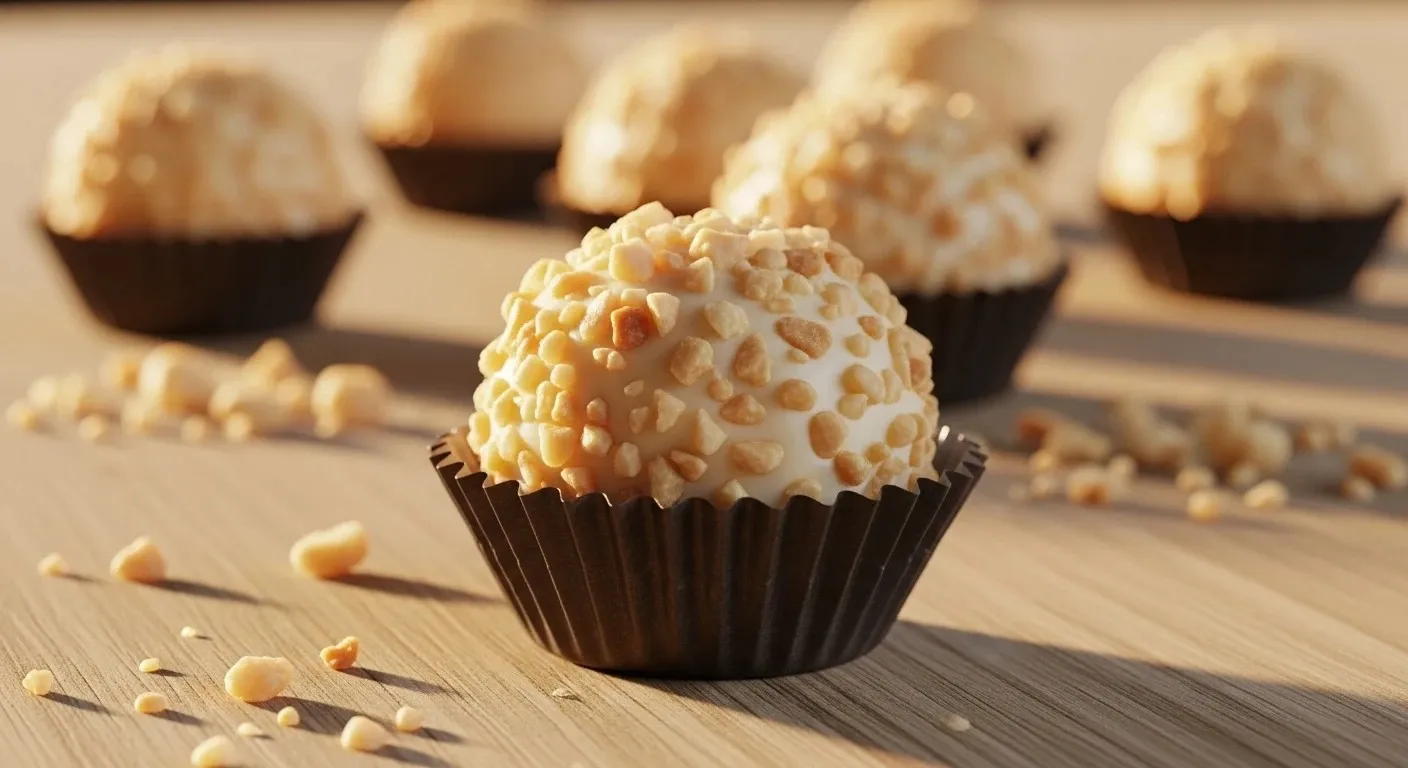
What most guides miss is how much the environment changes your results, especially the coating. Coconut-coated white brigadeiro is classic, but coconut adhesion is humidity-sensitive. If your kitchen is humid, coconut can clump, go limp, or slide off, and your brigadeiros can feel tacky on the outside even if the inside is perfect.
A few practical fixes:
- Choose coconut particle size selection intentionally. Finely desiccated coconut sticks better than large flakes when the surface is slightly moist.
- Let the brigadeiro balls “skin over” for 10–15 minutes before coating if they feel too wet.
- If it’s very humid, use a mix of coconut and milk powder for the coating. It stays drier and helps with handling.
This also connects to shelf life. Brigadeiro lives inside a bigger holonym: home candy-making and the broader Brazilian confectionery tradition. At events like Festa Junina tables in Rio de Janeiro or São Paulo, you’ll often see brigadeiros served in small papers because it protects the surface and keeps the coating intact.
For ingredient labeling nerds: organizations like the Codex Alimentarius Commission influence international standards around dairy and cocoa products, which is why “white chocolate” labeling can vary by country. In practice, for this recipe, what matters is choosing a white chocolate you like the taste of, and managing heat so the texture stays smooth.
Practical Tips for Consistent Results
A few tips you can use immediately:
- Use a heavy saucepan and a silicone spatula. Thin pans burn fast, and burning is the #1 cause of grainy texture.
- Start stirring early and don’t stop. Constant stirring supports emulsion and prevents scorching on the bottom edges.
- Salt is tiny but essential. A pinch makes the creamy milk flavor pop instead of tasting one-note sweet.
- Adjust for batch scaling. If you double the recipe, expect a longer cook time and a slightly slower viscosity adjustment. Doneness cues still apply.
- Cool properly before rolling. The cooling phase isn’t optional. It’s what turns a sticky mass into a rollable paste.
If you’re building gift boxes, line them like gourmet dessert boxes do: small paper cups, then airtight containers to protect the coating.
Common Mistakes and What to Avoid
Most beginners run into the same issues, and they’re fixable.
- Using high heat to “save time.”
High heat often leads to a separated mixture (oily edges, broken texture). Low heat gives controlled thickening. - Undercooking because it “looks thick enough.”
If it’s too sticky to roll, it’s usually undercooked. Put it back on the stove for a few minutes and cook until it truly pulls from the pan. - Overcooking past the rollable stage.
Overcooked brigadeiro can turn crumbly or greasy instead of smooth. Stop when it’s glossy and cohesive, not dry and matte. - Skipping the cooling phase.
Warm brigadeiro will smear and stick. Let it cool until room temperature before shaping.
Brands like Nestlé’s condensed milk are consistent, but any condensed milk can work. The technique is the difference-maker.