
A great pudim de leite recipe looks simple on paper. Just milk, eggs, sugar, and condensed milk. Yet anyone who has sliced into a curdled, cracked custard knows this Brazilian classic demands a bit more care than most baked desserts.
In Brazil, pudim de leite is more than a sweet treat. It’s the glossy centerpiece at Sunday lunches, birthday tables, and especially during Festa Junina celebrations. I’ve tested this Brazilian caramel custard dozens of times, adjusting oven temperature, caramel timing, and refrigeration time until that perfect silky texture holds its shape but still trembles slightly in the center.
By the end of this guide, you’ll understand not only how to make the best pudim de leite recipe, but why it works. You’ll learn the science behind protein coagulation threshold control, how to caramelize sugar evenly without crystallization, and how to unmold flawlessly for clean slice integrity retention.
Let’s start with what this dessert truly is.
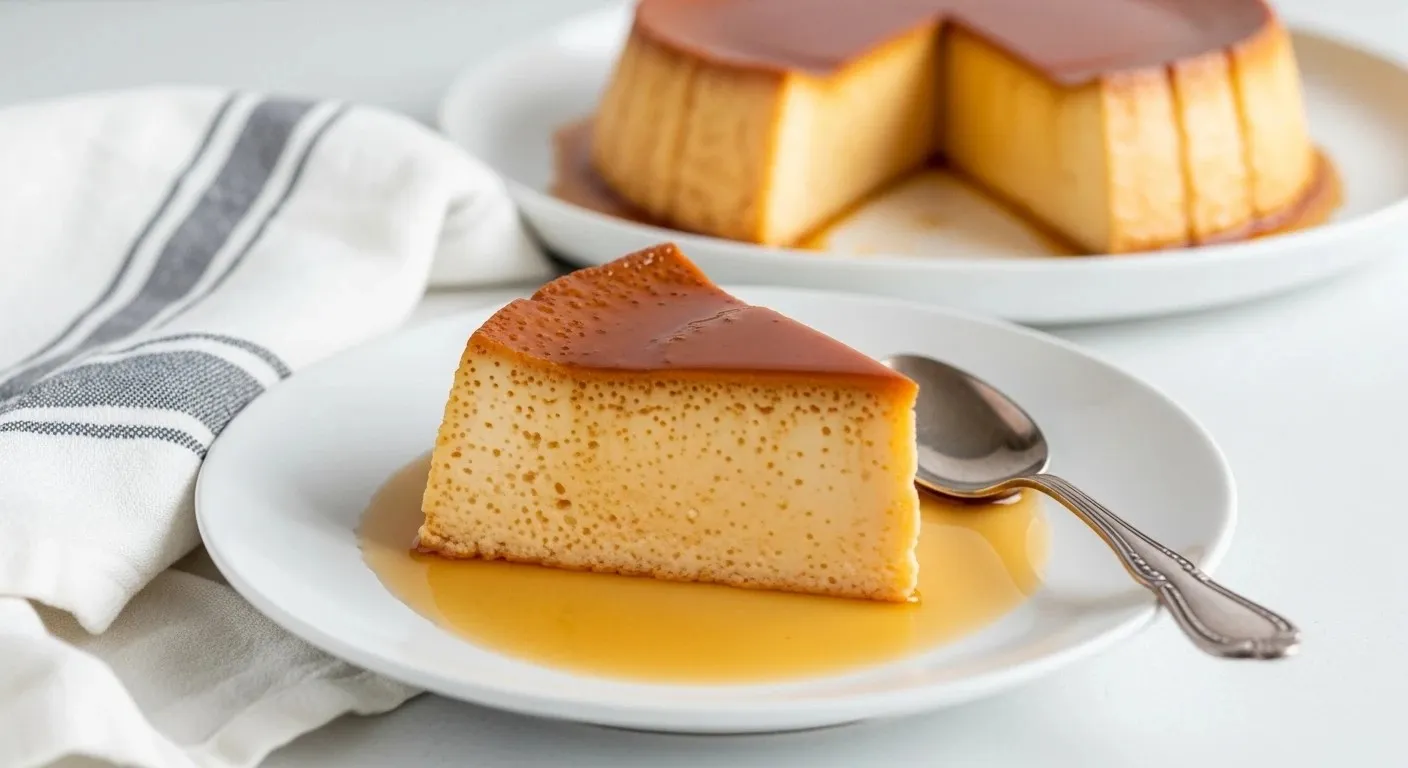
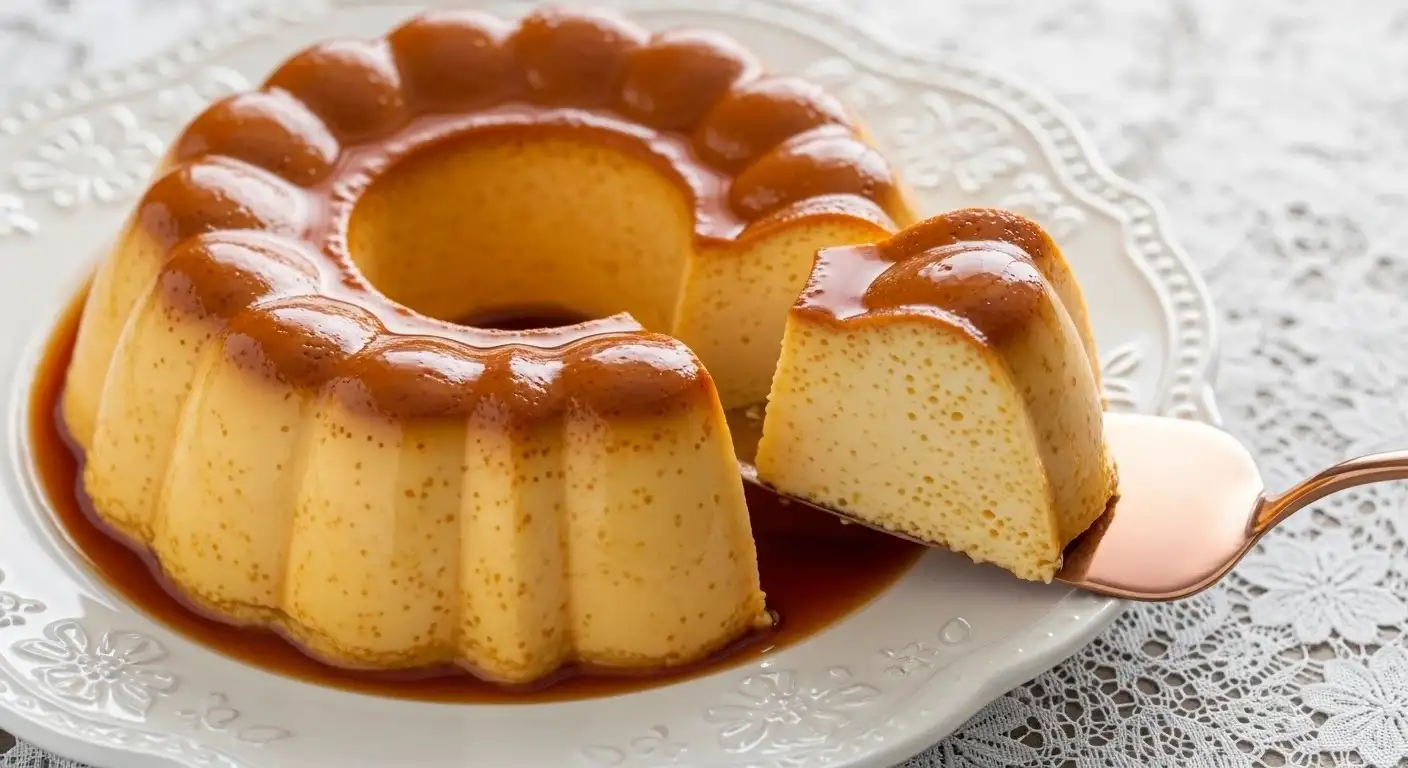
A pudim de leite recipe is a method for making a Brazilian baked custard prepared with sweetened condensed milk, eggs, milk, and a caramel syrup base. It is baked in a water bath, then chilled and inverted onto a plate to reveal a glossy caramel topping.
Pudim de leite belongs to the broader category of custard desserts and caramel desserts within Latin American cuisine. Its roots trace back to Portugal, where Iberian flan traditions influenced Brazilian culinary development. Over time, Brazil transformed that European flan into a richer dairy dessert using sweetened condensed milk, popularized nationally by Nestlé in the 20th century through its Leite Moça brand.
Unlike some traditional flan recipes that rely only on milk and sugar, pudim de leite condensado uses condensed milk as a core meronym of the custard base. This ingredient provides dense sweetness and structure through dairy protein matrix formation.
You’ll also find hyponyms such as pudim de leite tradicional, pudim de leite com coco, and pudim de leite no liquidificador. While flavors may shift, the core identity remains the same: a ring-shaped baked custard, cooked gently in a bain-marie and cooled before unmolding.
Within Brazilian culinary tradition, this dessert sits alongside brigadeiro, named after Brigadeiro Eduardo Gomes, as one of the country’s most iconic sweets.
At its core, this Brazilian condensed milk flan recipe depends on careful protein coagulation threshold control.
Eggs act as the structural agent. When exposed to oven heat, their proteins coagulate and set. But here’s the nuance: too low an oven temperature and you get an undercooked custard. Too high, and you cross the line into a curdled texture with visible cracks.
The water bath, or bain-marie thermal buffering system, prevents that. By placing your flan mold inside a larger pan filled with hot water, you create oven steam equilibrium. The water moderates heat transfer, reducing direct heat exposure and helping prevent surface cracks.
I prefer baking at a low oven temperature, around 325°F (160°C). High oven temperature may shorten baking time, but it increases the risk of a cracked surface and grainy interior.
Straining matters too. If you want a bubble-free custard filtration result, always strain custard mixture before pouring into the ring mold. That simple step removes air pockets that would otherwise ruin the smooth surface.
One overlooked detail competitors rarely mention is condensed milk density calibration. Different brands, including Leite Moça, vary slightly in viscosity. If your custard feels too thick before baking, a small splash of whole milk balances lactose-driven sweetness and improves texture.
Now let’s walk through a practical, reliable preparation that home cooks can follow confidently.
Many guides treat pudim as just another flan variation. That misses the bigger picture.
Pudim de leite sits inside the holonym of Brazilian culinary tradition, and more specifically within celebration sweets served at gatherings like Festa Junina. In cities such as São Paulo and Rio de Janeiro, it appears in bakeries, family homes, and upscale restaurants alike.
The Codex Alimentarius Commission sets global dairy standards that shape how condensed milk and sugar products are labeled and regulated internationally. While you may never think about it while baking, those standards influence ingredient consistency worldwide.
Understanding pudim within the broader system of dairy-based desserts and Latin American flan repertoire gives you deeper appreciation. For the full context of how this custard fits into the national table, explore our complete guide to Brazilian desserts
Unlike modern reinterpretations that add exotic flavors, the traditional vs. modern contrast here is important. Authentic pudim de leite tradicional relies on simplicity. Balanced sweetness, stable structure, and clean caramel flavor matter more than decoration.
Small details separate a good pudim from a great one.
Humidity-aware caramel storage also matters. In humid climates, caramel can soften excessively. Keep the pudding covered tightly to avoid absorbing excess moisture.
Cracks on top usually mean high oven temperature or skipping the gentle water bath. Direct heat leads to a curdled texture instead of a silky texture.
Runny custard often comes from underbaking or removing it before the center reaches proper set. Fully set custard still jiggles slightly. Undercooked custard sloshes like liquid.
Burnt caramel results from walking away during sugar melting. Smooth caramel requires attention. Sugar can go from glossy to burnt in seconds.
Unmolding too early is another classic issue. Chilling before unmolding ensures stable structure. Warm unmolding risks collapse and tearing.
Pudim de leite lasts about 3–4 days when you store it in the refrigerator in an airtight container. Proper preservation maintains texture and prevents caramel from becoming watery.
You can freeze pudim de leite, but freezing may slightly alter the texture. The Brazilian flan recipe relies on smooth dairy proteins, and freezing can disrupt that structure.
You can make variations without condensed milk, but it will not taste like authentic pudim de leite condensado. Condensed milk provides the dense sweetness and creamy body that define the dessert.
Watery pudding usually results from underbaking or insufficient refrigeration time. Ensure the custard sets fully in the oven and refrigerate at least four hours before unmolding.
Yes, many home cooks prepare pudim de leite no liquidificador. Blend gently to avoid excess bubbles, then strain the mixture for best results.
To unmold perfectly, run a thin knife along the edge, place a plate on top, and invert onto the plate in one confident motion. If needed, briefly warm the base to loosen caramel syrup.
Mastering a pudim de leite recipe comes down to gentle heat, patient cooling, and careful caramel work. Once you understand how eggs set and how a water bath protects texture, the process feels simple rather than risky.
This Brazilian caramel custard rewards precision with elegance. Make it once with attention, and you’ll have a reliable dessert for gatherings, holidays, or quiet family dinners. Ready to explore more traditional sweets? Start with our complete guide to Brazilian desserts

Through Brazil Eats, I share authentic Brazilian recipes inspired by family traditions and everyday cooking.